

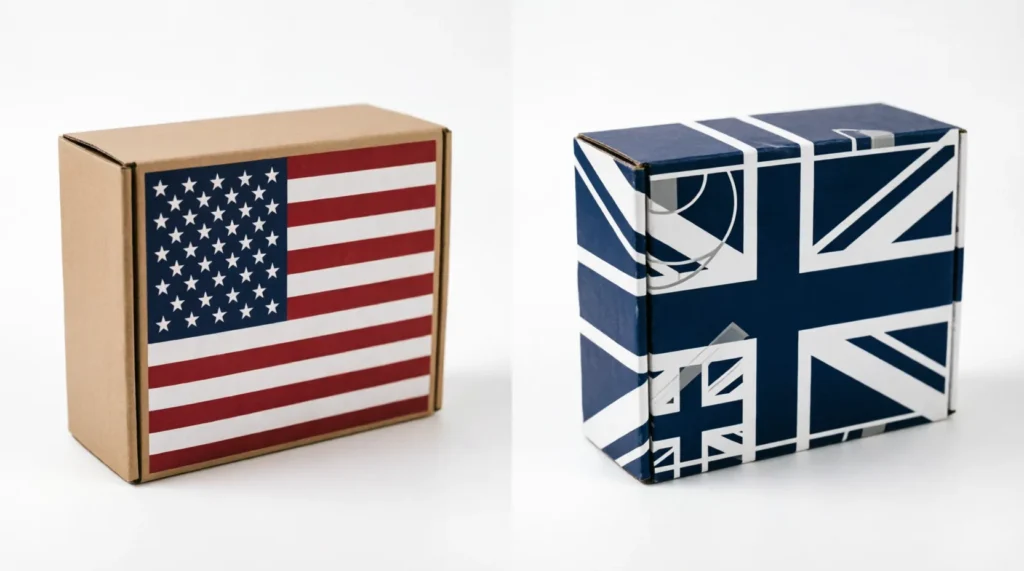
Quick answer: Both “sellable” and “saleable” are correct spellings meaning “capable of being sold.” Use “saleable” for British English audiences and “sellable” for American English readers. Neither is wrong—they’re regional variants of the same word.
You’ve probably stared at your screen, cursor blinking, wondering whether to type “sellable” or “saleable” in that product description or sales report. I’ve seen this exact hesitation freeze writers mid-sentence countless times, from junior copywriters drafting e-commerce listings to seasoned marketers preparing quarterly presentations. The confusion is completely understandable because both spellings appear in professional writing, and autocomplete suggestions don’t help clarify which one you should actually use.
| Term | Meaning / When to use | Example sentence |
|---|---|---|
| Sellable | American English spelling; use for US audiences, American publications, and US-based business communications | “The inventory team confirmed that 85% of last season’s stock remains sellable after the warehouse inspection.” |
| Saleable | British English spelling; use for UK audiences, Commonwealth countries, and British publications | “After the refurbishment, the property is now in a saleable condition and ready for viewing.” |
When to use sellable
“Sellable” is the straightforward American English spelling that follows the typical pattern of adding “-able” directly to the verb “sell.” I recommend using this spelling whenever you’re writing for American audiences, US-based companies, or publications that follow American style guides like the Associated Press (AP) Stylebook or the Chicago Manual of Style.
Here’s when I consistently use “sellable” in my editing work:
- E-commerce product descriptions for US retailers: “After quality control, only sellable items are shipped to customers, ensuring zero defects.”
- American business reports and presentations: “The Q3 analysis shows that 67% of returned merchandise can be restocked as sellable inventory.”
- US marketing copy and advertising: “Our refurbishment process guarantees that every sellable unit meets brand-new standards.”
Let me show you three real-world scenarios where I’ve corrected this spelling:
Example 1 – Email to American client:
- Incorrect: “We need to determine which returned items are still saleable for the US market.”
- Corrected: “We need to determine which returned items are still sellable for the US market.”
Example 2 – Resume bullet point:
- Incorrect: “Increased saleable inventory by 23% through improved quality control processes.”
- Corrected: “Increased sellable inventory by 23% through improved quality control processes.”
Example 3 – Text message to colleague:
- Incorrect: “Can you check if the damaged boxes are still saleable?”
- Corrected: “Can you check if the damaged boxes are still sellable?”
According to Merriam-Webster, “salable” (which is the dictionary’s primary entry spelling) means “fit to be sold : MARKETABLE,” and this definition applies equally to the “sellable” variant used in American English. The dictionary recognizes both spellings as legitimate, though it lists the “a” version first.
When to use saleable
“Saleable” represents the traditional British English spelling and remains the preferred form throughout the United Kingdom, Ireland, Australia, New Zealand, and other Commonwealth nations. This spelling preserves the root word “sale” rather than the verb “sell,” which some etymologists argue connects more directly to the noun form.
I use “saleable” consistently in these contexts:
- British business correspondence and reports: “The auction house estimated that approximately 40% of the estate items were in saleable condition.”
- UK e-commerce and retail communications: “All saleable goods must be clearly marked with pricing before the weekend promotion begins.”
- Commonwealth academic and professional writing: “The study examined factors that affect whether damaged goods remain saleable in secondary markets.”
Here are three concrete examples from my editing experience with British clients:
Example 1 – UK company email:
- Incorrect: “We’ve written off £15,000 of inventory that’s no longer sellable.”
- Corrected: “We’ve written off £15,000 of inventory that’s no longer saleable.”
Example 2 – Australian product listing:
- Incorrect: “Only sellable stock is displayed on the website to avoid customer disappointment.”
- Corrected: “Only saleable stock is displayed on the website to avoid customer disappointment.”
Example 3 – Canadian business proposal:
- Incorrect: “The consultant will assess which assets remain sellable after the merger.”
- Corrected: “The consultant will assess which assets remain saleable after the merger.”
Interestingly, while researching regional spelling variations, I came across information about Sellafield, a nuclear site in Cumbria, England. While completely unrelated to our spelling discussion, the name itself demonstrates how British English preserves certain spelling patterns that differ from American conventions—much like how “saleable” maintains the “sale” root.
How to remember the difference
Here’s the memory trick I teach all my junior editors: “Americans sell, the British have a sale.”
Think about it this way: American English uses the verb form “sell” plus “-able” to create “sellable.” British English uses the noun form “sale” plus “-able” to create “saleable.”
Another foolproof method: Look at your audience’s location. If they spell it “colour,” “favour,” and “organisation,” they’ll expect “saleable.” If they spell it “color,” “favor,” and “organization,” they want “sellable.”
Here’s an editor-level insight that most style guides won’t tell you: When in doubt on international projects or when writing for global audiences, I default to “sellable” because it’s more phonetically intuitive—you’re literally adding “-able” to the verb “sell,” which is how we form most adjectives in English (read → readable, wash → washable, break → breakable). The “saleable” spelling is actually the irregular one, even though it’s traditional in British English.
Common mistakes and exceptions
The most common mistake I see isn’t choosing the wrong regional spelling—it’s mixing regional spellings within the same document. I regularly edit documents where writers use “saleable” in one paragraph and “sellable” in the next, or worse, use British spelling for this word but American spelling for everything else. This inconsistency screams unprofessional and undermines your credibility.
Mistake 1: Inconsistent regional spelling
- Problem: A document uses “colour,” “centre,” and “organisation” throughout but suddenly switches to “sellable” instead of “saleable.”
- Fix: Choose one regional standard and stick with it consistently throughout your entire document.
Mistake 2: Assuming one spelling is “more correct”
- Problem: Writers insist that “sellable” is wrong because their spellchecker underlines it, or vice versa.
- Fix: Understand that both are correct; it’s purely a regional preference, not a matter of right versus wrong.
Mistake 3: Using the wrong spelling for your target market
- Problem: An American company’s UK website uses “sellable” throughout, creating a subtle but noticeable disconnect for British readers.
- Fix: Always match your spelling to your primary audience’s regional standard.
Exception: Legal and technical documents In some legal contracts or technical specifications that reference international standards, you might see both spellings used deliberately to cover all jurisdictions. I’ve edited distribution agreements that state “products must remain saleable/sellable in original packaging” to ensure the document holds up in both US and UK courts. This is one of the few cases where using both spellings is not just acceptable but strategically smart.
Exception: Brand names and trademarks If you’re writing about a specific product, software, or service that has “Sellable” or “Saleable” in its official name, always use the spelling the company uses, regardless of your regional standard. I once had to explain to a US client that they needed to write “Saleable Inventory Pro” (the software’s actual name) even though they were American and would normally use “sellable” everywhere else.
Frequently Asked Questions
Is “sellable” a real word or just slang? Yes, “sellable” is absolutely a real, dictionary-recognized word in American English. It appears in major dictionaries including Merriam-Webster and follows standard English word-formation rules by adding the suffix “-able” to the verb “sell.”
Can I use “saleable” in American English or “sellable” in British English? Technically yes, but it will look odd to native readers. While both spellings are understood everywhere, using the “wrong” regional variant marks you as an outsider or suggests you didn’t proofread carefully. Always match your spelling to your audience’s regional standard.
What about other forms like “unsellable” or “unsaleable”? The same regional rules apply: Americans write “unsellable” and the British write “unsaleable.” The prefix “un-” doesn’t change which regional spelling convention you should follow.
Which spelling is more common globally? “Saleable” is more common globally because British English spelling conventions are used across more countries (UK, Australia, New Zealand, South Africa, much of Asia and Africa). However, “sellable” dominates in American business contexts and US-influenced international commerce.
Do spell checkers mark one as wrong? Most modern spell checkers recognize both spellings as correct. However, if your spell checker is set to US English, it might flag “saleable” as a potential error, and if it’s set to UK English, it might question “sellable.” The key is ensuring your spell checker’s language setting matches your intended audience.

Brian Garcia has always been fascinated by the intricacies of the English language. With a Master’s degree in English Literature from the University of Chicago and over 15 years of experience in the field, Brian has dedicated his career to unraveling the complexities of word usage, comparisons, and spelling. His expertise lies in breaking down commonly confused words, helping readers gain clarity and confidence in their language skills. What drew Brian to this field was his passion for storytelling and his love for the art of communication. As a content creator for WordCompareHub, he focuses on engaging readers with insightful articles that demystify tricky word pairs and offer practical spelling tips. In his free time, Brian enjoys delving into etymology and exploring the evolution of words through history.