

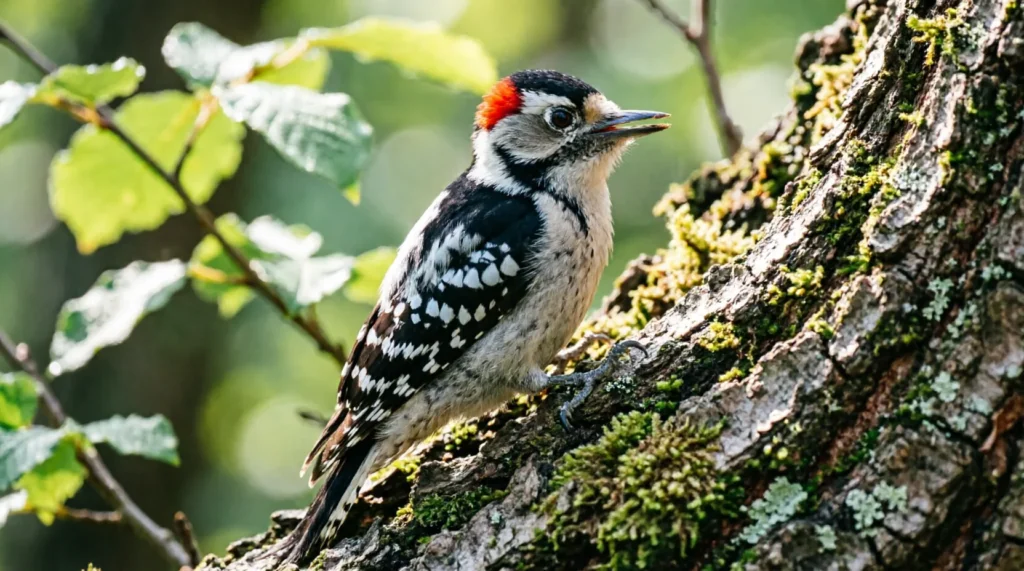
Quick answer: Both names are correct. They refer to two distinct species of woodpeckers found in Europe and Asia. The “lesser spotted woodpecker” is the smaller bird (Dryobates minor), while the “greater spotted woodpecker” is the larger, more common bird (Dendrocopos major). You choose the name based on which specific bird you are identifying.
It is easy to confuse these two birds because their names sound like a simple size comparison of the same animal, much like asking if you should write “gray or grey.” However, in ornithology, “lesser” and “greater” are formal parts of the common names for two separate species. Using the wrong name isn’t a grammatical error; it is a misidentification of the bird itself. I have spent years editing nature guides and birding blogs, and I constantly see writers mix up these two due to their similar plumage patterns. Understanding the difference ensures your writing is both scientifically accurate and helpful to your readers.
| Term | Meaning / When to use | Example sentence |
|---|---|---|
| Lesser spotted woodpecker | Use when referring to Dryobates minor, the smaller, rarer species with no red on the head (females) or limited red (males). | “We were thrilled to spot a lesser spotted woodpecker tapping on the dead oak branch.” |
| Greater spotted woodpecker | Use when referring to Dendrocopos major, the larger, widespread species with a distinct red patch under the tail and black-and-white pied plumage. | “The greater spotted woodpecker is a frequent visitor to our garden bird feeders in winter.” |
When to use lesser spotted woodpecker
You should use the term “lesser spotted woodpecker” only when you are specifically discussing Dryobates minor. This bird is significantly smaller than its counterpart, roughly the size of a house sparrow. It is characterized by its zebra-striped back and, in males, a small red patch on the nape of the neck. Females lack any red on the head entirely.
This species is generally shyer and less common than the greater spotted woodpecker. It prefers mature deciduous woodlands and is often heard before it is seen, producing a soft, rapid drumming sound. In my experience editing field guides, writers often mistakenly label photos of juvenile greater spotted woodpeckers as “lesser” because they lack the adult red coloring. However, the size difference and habitat preferences are key identifiers.
Here are three examples of how to correctly use this term in different contexts:
- In a nature blog post: “Unlike the boisterous greater spotted woodpecker, the lesser spotted woodpecker is a elusive creature that requires patience to observe in its natural habitat.”
- In a scientific report: “Population surveys indicate that the lesser spotted woodpecker has declined in certain regions due to the loss of old-growth forests.”
- In a birdwatching journal: “Saw a possible lesser spotted woodpecker near the riverbank today; need to confirm if it was just a juvenile great spotted due to the lighting.”
According to Woodpecker, woodpeckers are a family of birds known for their specialized anatomy, including strong beaks and shock-absorbing skulls, which allows them to drill into wood without injury. This anatomical specialization is shared by both the lesser and greater species, but their ecological niches differ slightly.
When to use greater spotted woodpecker
The term “greater spotted woodpecker” refers to Dendrocopos major (also known simply as the great spotted woodpecker in some regions). This is the most common woodpecker across much of Europe and Asia. It is larger, louder, and more adaptable to human environments, often visiting garden bird tables for fat balls and seeds.
You should use this name when describing the bird with bold black-and-white plumage, white shoulder patches, and a distinctive bright red vent (under the tail). Males have a red patch on the nape, while females do not. Juveniles have a red crown, which can cause confusion, but their size and behavior usually align with the greater species.
This bird is a year-round resident in many areas and is known for its powerful drumming on resonant branches. It is also one of the few birds that creates “sap wells” in trees, although this behavior is more commonly associated with other species in North America. In the UK and Europe, it is the default “spotted woodpecker” most people encounter.
Here are three examples of correct usage:
- In a gardening newsletter: “To attract the greater spotted woodpecker to your garden, consider hanging high-quality suet blocks in a quiet corner of your yard.”
- In a wildlife photography caption: “A male greater spotted woodpecker perches on a birch tree, displaying its vibrant red nape against the stark white bark.”
- In an educational email to students: “Please note that the greater spotted woodpecker is protected under local wildlife laws, so we must observe it from a distance without disturbing its nesting sites.”
The adaptability of this species is notable. As noted in broader ornithological contexts, such as the general information found on Greater, the term “greater” is often used in biological nomenclature to distinguish larger or more dominant species within a genus. In this case, the greater spotted woodpecker is not only larger but also more numerically dominant in its range.
How to remember the difference
Remembering which woodpecker is which can be tricky because their names are so similar. Here is a simple mnemonic I use when proofreading nature articles:
“Lesser is Little, Greater is Grand.”
- Lesser = Little: The lesser spotted woodpecker is the smaller, shyer, and less common bird. Think of “less” as meaning “less visible” or “less size.”
- Greater = Grand: The greater spotted woodpecker is the larger, bolder, and more widespread bird. Think of “greater” as meaning “greater presence” in your garden or woods.
Another trick is to look at the red markings. The Greater has a Great deal of red (red vent, red nape on males, red crown on juveniles). The Lesser has Less red (only a small nape patch on males, none on females).
I also recommend focusing on the habitat. If you are writing about a bird in a dense, old forest that is hard to find, it is likely the lesser. If you are writing about a bird pounding on a backyard feeder or a park tree, it is almost certainly the greater.
Common mistakes and exceptions
Even experienced writers stumble over these two names. Here are the most common errors I correct in manuscripts:
- Confusing juveniles: Juvenile greater spotted woodpeckers have a red crown, which can make them look different from adults. Writers sometimes mistake them for a different species or assume the red crown means it is a male lesser. Remember: size matters. If it is sparrow-sized, it is lesser. If it is starling-sized or larger, it is greater.
- Regional naming variations: In some parts of Europe, the greater spotted woodpecker is simply called the “great spotted woodpecker.” Do not confuse “great” with “greater.” They refer to the same bird (Dendrocopos major). However, “lesser” is always “lesser.” There is no “little spotted woodpecker” in this context.
- Capitalization errors: In general prose, common names of birds are not capitalized unless they contain a proper noun (e.g., “Downy woodpecker” vs. “Lewis’s woodpecker”). Therefore, write “lesser spotted woodpecker” and “greater spotted woodpecker” in lowercase. However, if you are following a specific style guide that capitalizes all bird names, be consistent. I prefer lowercase for general readability unless the publication demands otherwise.
- US vs. UK differences: These specific species are native to Europe and Asia. In North America, you will find the Downy woodpecker (similar to the lesser) and the Hairy woodpecker (similar to the greater). Do not use “lesser spotted” to describe a Downy woodpecker in a US-centric article. Use the local common names to avoid confusing your audience.
Frequently Asked Questions
Is the lesser spotted woodpecker rare? Yes, the lesser spotted woodpecker is generally considered uncommon and localized compared to the widespread greater spotted woodpecker. It is often listed as a species of conservation concern in several European countries due to habitat loss.
Can lesser and greater spotted woodpeckers interbreed? No, they are distinct species with different genetic makeups, behaviors, and mating calls. While they may inhabit the same woodlands, they do not hybridize. Their ecological niches are separated by size and foraging preferences.
Why is it called “spotted”? Both birds are called “spotted” because of their black-and-white barred or spotted plumage on their wings and back. This pattern provides camouflage against the dappled light of tree bark, helping them avoid predators while they forage.
Do both woodpeckers visit garden feeders? The greater spotted woodpecker frequently visits garden feeders, especially in winter when natural food sources are scarce. The lesser spotted woodpecker is much shyer and rarely visits gardens, preferring to forage in natural woodland settings.

Kimberly Sanchez holds a Bachelor’s degree in Linguistics from UCLA and has spent over a decade working as a language consultant and educator. Her journey in the world of words began with a curiosity about how language shapes our perception of the world. With a keen eye for detail and a knack for making complex concepts accessible, Kimberly specializes in the nuances of English word comparisons and their real-world implications. She joined WordCompareHub to share her insights on frequently confused words and to promote a deeper understanding of language accuracy. Kimberly writes content that is both enlightening and practical, aimed at readers who seek to enhance their communication skills. Outside of her professional pursuits, she is an avid reader and enjoys exploring multilingual environments to observe linguistic diversity in action.