

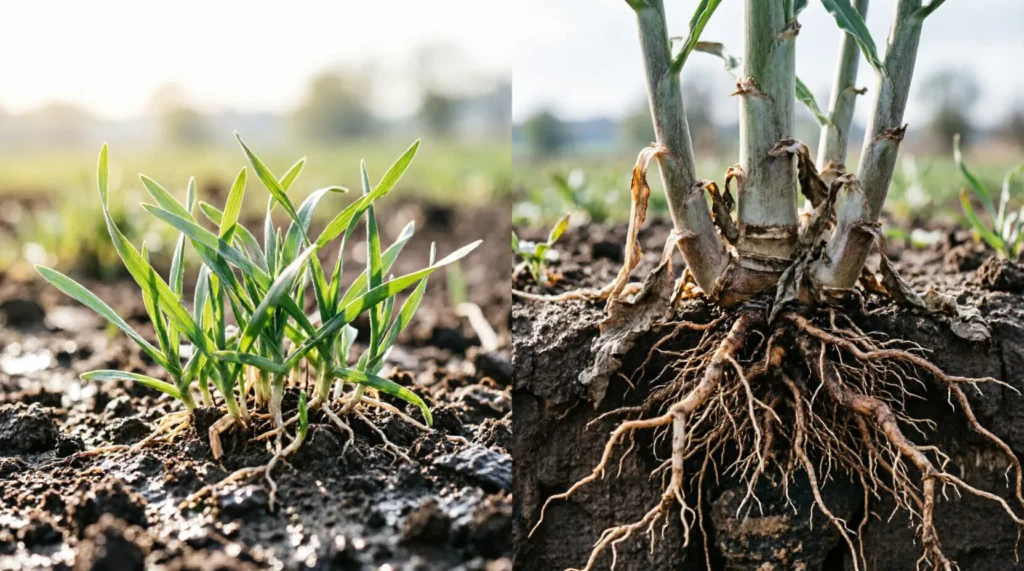
Quick answer: Annual grass completes its entire life cycle in one growing season and dies after setting seed, while perennial grass lives for multiple years and regrows from the same root system each spring. Choose annual for quick, temporary coverage; choose perennial for a permanent, low-maintenance lawn.
Homeowners and gardeners constantly mix up these two terms when planning their landscapes. The confusion is understandable—both types of grass serve important purposes, but they function completely differently in your yard. Understanding the distinction between annual and perennial grass saves you time, money, and frustration when establishing or maintaining your lawn.
|# Annual vs Perennial Grass: The Definitive Guide to Choosing the Right Lawn
Quick answer: Use annual grass when you need a fast, temporary green cover for a single season; choose perennial grass for a long-term, self-regenerating lawn that returns year after year.
Homeowners and gardeners often find themselves standing in the garden center aisle, paralyzed by two similar-looking bags of seed. One promises instant gratification, while the other offers longevity. The confusion between annual and perennial grass is not just about botany; it is about managing expectations for your landscape’s lifespan, maintenance budget, and aesthetic goals. Understanding the fundamental biological difference between these two life cycles is the key to stopping the cycle of reseeding every spring or watching your lawn die off in the heat of summer.
| Term | Meaning / When to use | Example sentence |
|---|---|---|
| Annual Grass | Completes its entire life cycle (germinate, grow, seed, die) in one year or less. Best for quick erosion control or filling bare spots temporarily. | “I planted annual ryegrass to keep the soil from washing away while I waited for the new patio to be built.” |
| Perennial Grass | Lives for more than two years, regrowing from the same root system each season. Best for permanent lawns, pastures, and low-maintenance landscapes. | “Our perennial fescue lawn stayed green through the drought because its deep roots accessed moisture below the surface.” |
When to use Annual Grass
Annual grasses are the sprinters of the plant world. They are genetically programmed to grow rapidly, produce seeds, and then die within a single growing season. This “live fast, die young” strategy makes them incredibly useful for specific, short-term landscaping needs where permanence is not the goal.
The primary advantage of annual grass is speed. If you have a construction site that has been stripped of vegetation, or if you have killed off a patch of weeds and need immediate greenery to prevent soil erosion, annuals are your best friend. They germinate quickly, often within 5–10 days, and establish a dense mat of foliage that holds soil in place. However, you must accept that this grass will die. It does not go dormant; it completes its life cycle and perishes.
According to Wikipedia, an annual plant is defined by its habit of completing its life cycle from seed to seed within one growing season. This biological constraint means you cannot treat annual grass as a “set it and forget it” solution. You are signing up for yearly reseeding if you want to maintain the cover.
Here are three realistic scenarios where I recommend annual grass:
- The Construction Buffer: You are renovating your backyard and the excavators have torn up the turf. You need something to stop mud from tracking into the house during the six-month build. Fix: Sow annual ryegrass. It will hold the soil until the construction is done, at which point you can till it under and plant your permanent lawn.
- The Winter Green-Up: You live in a southern climate with warm-season perennial grass (like Bermuda) that turns brown and dormant in winter. You hate the look of dead grass. Fix: Overseed with annual ryegrass in late fall. It will provide vibrant green color through the winter and then naturally die off in late spring as the heat returns, allowing your perennial Bermuda to wake up without competition.
- The Test Patch: You are unsure if a shady corner of your yard will support grass. Fix: Plant cheap annual seed there first. If it dies due to shade, you have lost very little money and effort compared to installing expensive perennial sod.
When to use Perennial Grass
Perennial grasses are the marathon runners. They are designed to survive for multiple years, often decades, by focusing energy on developing robust root systems rather than just rapid seed production. When you plant perennial grass, you are making an investment in infrastructure.
The defining characteristic of perennial grass is its ability to survive adverse conditions—such as winter cold or summer drought—by going dormant or slowing growth, only to regenerate from the same crown and root system when conditions improve. As noted in Wikipedia, perennial plants live for more than two years, distinguishing them from annuals and biennials. This longevity translates to less work over time. Once established, perennial grass requires less frequent seeding, less water (due to deeper roots), and generally provides a thicker, more weed-resistant turf.
You should choose perennial grass when you want a permanent lawn. This includes front yards, backyards, parks, and sports fields where durability and consistency are paramount. While the initial establishment period can be slower than annuals, the long-term payoff is a resilient ecosystem.
Consider these real-world applications where perennial grass is the superior choice:
- The Family Lawn: You have kids and dogs who play in the yard daily. You need grass that can recover from wear and tear. Fix: Plant a blend of perennial tall fescue and Kentucky bluegrass. These species spread via rhizomes or tillers, filling in bare spots created by foot traffic without needing to be replanted.
- The Low-Water Landscape: You live in an area with water restrictions or high utility costs. Fix: Choose drought-tolerant perennial varieties like fine fescues. Their deep root structures allow them to access subsurface moisture, keeping the lawn alive during dry spells where annuals would shrivel and die permanently.
- The Erosion-Control Slope: You have a steep hill that needs permanent stabilization. Fix: Plant perennial bunchgrasses. Unlike annuals that die and leave soil exposed again, perennials anchor the soil year after year, preventing landslides and runoff.
How to remember the difference
The most common mistake I see in client consultations is the assumption that “annual” means it comes back every year because the word sounds like “anniversary.” This is a dangerous linguistic trap. To avoid this, I teach a simple mnemonic based on the root of the words.
Think of Annual as “One-and-Done.” It happens once, in one year, and then it is finished. The plant’s goal is to make seeds and exit the stage.
Think of Perennial as “Permanent.” Both words start with “P” and share the concept of endurance. A perennial plant is a permanent resident in your garden. It moves in, sets up its root system, and stays for the long haul.
Another editor-level trick is to look at the lifecycle timeline. Draw a straight line for annuals: Start -> Grow -> Seed -> Die. Draw a circle for perennials: Grow -> Dormant -> Regrow -> Dormant -> Regrow. If the plant dies completely above and below ground, it was likely an annual. If it leaves behind living roots or crowns, it is a perennial.
Common mistakes and exceptions
Even with the rules clear, there are edge cases that trip up even experienced gardeners. The most significant source of confusion is the behavior of grasses in different climates.
The Climate Misconception A grass that is perennial in its native habitat may behave as an annual in a harsher climate. For example, perennial ryegrass is a true perennial in mild climates like the Pacific Northwest. However, if you plant it in a region with severe winters, it may die out completely, forcing you to reseed it every year. In that specific context, it is functioning as an annual, even though biologically it is a perennial. Always check the USDA Hardiness Zone map for your specific seed variety.
Biennials: The Middle Ground While rare in turf grasses, some plants are biennials, taking two years to complete their life cycle. Homeowners sometimes confuse these with perennials. If a plant grows leaves in year one, flowers and seeds in year two, and then dies, it is a biennial, not a perennial. True perennials do not die after seeding; they continue to vegetate.
Overseeding Confusion Many homeowners overseed their perennial lawns with annual ryegrass in the fall. A common mistake is assuming the annual ryegrass will turn into a permanent part of the lawn. It will not. When summer heat arrives, the annual ryegrass will die. If you are not prepared for this transition, your lawn will look patchy and dead in June. The fix is to anticipate this death and ensure your underlying perennial grass is healthy enough to take over as the annual fades.
US vs. UK Terminology In the US, “ryegrass” can refer to both annual (Lolium multiflorum) and perennial (Lolium perenne) species. In the UK, the distinction is equally critical but often labeled differently in commercial mixes. Always read the Latin name on the seed bag. Lolium multiflorum is annual. Lolium perenne is perennial. Relying on the common name alone is a recipe for error.
Frequently Asked Questions
Can I mix annual and perennial grass seeds together? Yes, this is a common practice called “nurse cropping.” The annual grass grows quickly to protect the soil and suppress weeds while the slower-growing perennial grass establishes its roots. The annual will eventually die, leaving the perennial to dominate.
Which is better for pet owners: annual or perennial grass? Perennial grass is significantly better for pet owners. Annual grass dies after one season, requiring constant reseeding which is disrupted by dog urine and digging. Perennial grasses, especially tough varieties like tall fescue, can recover from wear and tear and do not need to be replanted annually.
Why did my “perennial” lawn die after one winter? It likely died due to extreme cold outside its hardiness zone, disease, or poor drainage. While perennials are designed to survive winter, they are not invincible. If the crown of the grass freezes solid or sits in ice-covered water, it can die. Check if you planted a variety suited for your specific USDA zone.
Is annual grass cheaper than perennial grass in the long run? No. While annual seed is often cheaper per bag initially, the cost of buying seed, labor, and water every single year adds up. Perennial grass has a higher upfront establishment cost but requires no reseeding, making it far more cost-effective over a 3-5 year period.

Nathan Williams is a seasoned editor and writer with a passion for the subtleties of the English language. With a degree in English from NYU and more than 12 years of editorial experience, he has honed his expertise in spelling accuracy and the comparison of often-misused words. Nathan’s foray into language analysis was sparked by his desire to help others communicate more effectively and avoid common pitfalls in writing. At WordCompareHub, he crafts comprehensive guides and articles that discuss word usage distinctions and provide effective spelling strategies. Nathan is driven by the belief that clarity in language is key to effective communication. In his leisure time, he enjoys crosswords and participates in local word games, continually expanding his lexicon and sharpening his linguistic skills.