

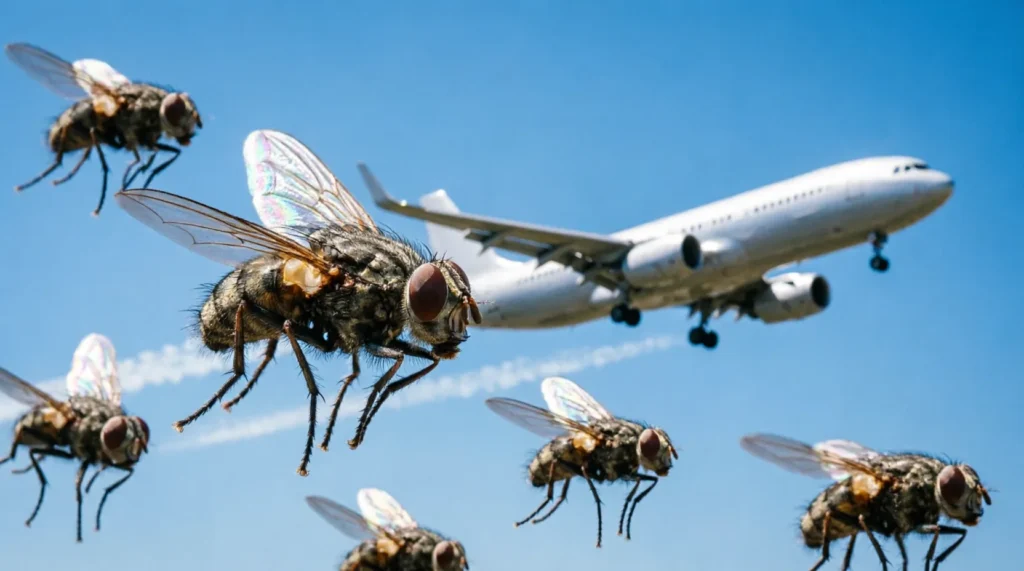
Quick answer: The correct spelling is flies. “Flys” is almost always a misspelling when referring to the insect or the action of flying. The only common exception is proper nouns, such as brand names or specific titles (e.g., The Flys). When discussing an aircraft, the verb remains “flies.”
I have spent over fifteen years editing manuscripts, marketing copy, and technical documentation, and I still see “flys” pop up with surprising frequency. It is a persistent error that stems from a misunderstanding of how English handles verbs ending in “y.” Whether you are writing a casual text message, a professional email, or a creative story, using the wrong form can undermine your credibility. This article cuts through the confusion to give you the definitive rule, clear examples, and a memory trick that will ensure you never make this mistake again.
The confusion usually arises because English spelling rules for pluralizing nouns and conjugating verbs can feel inconsistent. However, for the word “fly,” the rule is actually quite rigid. If you are talking about the insect that buzzes around your kitchen or the action of piloting an aircraft, the correct form is flies. “Flys” is not a standard English word for these contexts.
| Term | Meaning / When to use | Example sentence |
|---|---|---|
| Flies | The third-person singular present tense of the verb “to fly”; also the plural noun for the insect. | The pilot flies the plane every Tuesday. |
| Flys | Incorrect for verbs and insects; only used in specific proper nouns or brand names. | The band named The Flys released a new album. |
When to use Flies
You should use flies in two primary grammatical contexts: as a verb and as a noun. Understanding the distinction between these two uses helps clarify why the spelling changes from “fly” to “flies.”
As a Verb (Third-Person Singular)
When you are describing the action of moving through the air, operating an aircraft, or traveling by air, and the subject is he, she, it, or a singular noun, you must change the “y” to “i” and add “es.” This follows the standard English rule for verbs ending in a consonant + y.
Consider these real-world examples where I have corrected this error in professional settings:
- In a corporate travel policy: “The CEO flies first class on international routes.” (Not “flys”)
- In a logistics report: “The drone flies autonomously over the warehouse inventory.” (Not “flys”)
- In a casual text: “She flies back home for the holidays next week.” (Not “flys”)
This rule applies regardless of whether the subject is a person, a bird, or a machine. According to Wikipedia’s entry on Plane, aircraft are designed to generate lift and fly through the atmosphere. When we describe what a plane does, we say it “flies.” For instance, “The Boeing 747 flies at high altitudes.” The subject “plane” is singular, so the verb must be “flies.”
As a Noun (Plural of Fly)
When referring to the small, winged insects, the plural form is also flies. This is a standard noun pluralization rule for words ending in a consonant + y. You drop the “y” and add “ies.”
Here are examples from everyday writing where this distinction matters:
- In a restaurant review: “We enjoyed the meal, but there were too many flies buzzing around the patio.” (Not “flys”)
- In a biology textbook: “House flies are known carriers of various bacteria.” (Not “flys”)
- In a home maintenance email: “Please check the screens; several flies got into the living room.” (Not “flys”)
It is worth noting that the term “flies” can also refer to other things, such as the flap on trousers or a type of fishing lure, but the pluralization rule remains the same. The consistency here is helpful: whether it is an insect or an action, if it comes from “fly,” the plural or third-person singular form is “flies.”
When to use Flys
You should essentially never use “flys” in standard grammatical contexts. It is not a valid verb form, and it is not the correct plural for the insect. However, there is one narrow exception where you might encounter this spelling: proper nouns.
Proper Nouns and Brand Names
English allows for creative spelling in names, titles, and brands. If a band, a company, or a fictional character is named “Flys,” you must respect that capitalization and spelling. This is not a grammatical rule but a convention of naming.
For example:
- Music: There was a British punk band called The Flys. If you are writing about them, you write “The Flys played at the club.” You do not change their name to “The Flies” just because it looks like a grammatical error.
- Fiction: If an author creates a character named “Captain Flys,” you keep the spelling as intended by the creator.
Outside of these specific, capitalized proper nouns, “flys” is considered a misspelling. I often see this error in amateur fiction writing, where authors mistakenly believe that adding an “s” is the universal way to make a word plural or present-tense. This is a fundamental misunderstanding of English morphology.
Why “Flys” Looks Wrong to Editors
To a trained eye, “flys” jumps off the page as an error because it violates the phonetic and morphological patterns of English. Words ending in a vowel + y (like “play” or “buy”) simply add an “s” (plays, buys). But words ending in a consonant + y (like “fly,” “cry,” or “try”) change the “y” to “i” and add “es.”
When I edit a resume and see “He flys to conferences regularly,” it signals to me that the writer may lack attention to detail. It is a small error, but in competitive job markets, small errors can have large consequences. Always use “flies” for the verb.
How to remember the difference
Memory tricks are essential for mastering spelling rules that feel arbitrary. Here is the most effective mnemonic I teach my students and junior editors. For more, see Flies.
The “Cry-Try-Fly” Rule
Group the word “fly” with two other common verbs: cry and try.
- You do not say “he crys”; you say “he cries.”
- You do not say “she trys”; you say “she tries.”
- Therefore, you do not say “it flys”; you say “it flies.”
If you can remember how to spell “cries” and “tries,” you automatically know how to spell “flies.” They all follow the exact same pattern: consonant + y becomes -ies.
The “Y to I” Visual Trick
Imagine the letter “Y” as a fork in the road. When a verb ends in a consonant and hits that “Y” fork, it has to change direction. It drops the “Y” and picks up an “I” before adding “es.”
- Fly -> Flies
- Carry -> Carries
- Study -> Studies
This visual of swapping the Y for an I is a powerful mental checkpoint. Before you hit send on that email, ask yourself: “Did I swap the Y for an I?” If you wrote “flys,” you didn’t. If you wrote “flies,” you did.
Common mistakes and exceptions
Even native speakers stumble over certain edge cases. Let’s address the most frequent pitfalls and clarify any regional differences.
US vs. UK English
There is no difference between American English and British English regarding this specific word. Both varieties use flies for the plural noun and the third-person singular verb. Both varieties consider flys incorrect for these purposes. You do not need to adjust your spelling based on your audience’s location. This consistency is rare in English (compare “color/colour” or “center/centre”), so take advantage of it.
Confusion with “Buys” or “Pays”
A common mistake occurs when writers analogize incorrectly from words ending in a vowel + y.
- Correct: He pays the bill. (Vowel ‘a’ + y = just add s)
- Correct: He buys a car. (Vowel ‘u’ + y = just add s)
- Incorrect: He flys the plane. (Consonant ‘l’ + y = change y to i and add es)
The key is the letter before the Y. If it is a vowel (a, e, i, o, u), just add S. If it is a consonant, change Y to I and add ES. “Fly” ends in L, which is a consonant. Therefore, it follows the “ies” rule.
The “Zipper Fly” Exception
In fashion, the “fly” refers to the opening on trousers. The plural is still flies. “His jeans have double flies.” You would never write “His jeans have double flys.” This reinforces the rule that for common nouns, the plural is always “flies.”
Technical Jargon
In some very niche technical contexts, such as coding variable names or specific database entries, a developer might use “flys” as a shorthand or a unique identifier. However, this is not standard English usage. In any public-facing content, marketing material, or formal communication, stick to standard grammar. Using “flys” in a code comment is fine; using it in a press release is not.
Frequently Asked Questions
Is “flys” ever correct in standard English? No, “flys” is not correct for standard verbs or nouns. It is only acceptable as part of a proper noun, such as a brand name or a band name, where spelling is stylized by choice.
Why do people spell it “flys”? People often misspell it as “flys” because they apply the simple plural rule (adding “s”) to all words, ignoring the specific rule for words ending in a consonant + y. It is a common overgeneralization error.
Does the rule change if I am talking about a plane? No. Whether the subject is a bird, a person, or a plane, the verb form for he/she/it is “flies.” For example, “The plane flies at 30,000 feet.” The nature of the subject does not change the conjugation rule.
What is the past tense of fly? The past tense of “fly” is flew, and the past participle is flown. Neither of these forms involves the “flys” or “flies” spelling issue, but it is good to keep the irregular verb forms in mind to avoid further confusion.

Brian Garcia has always been fascinated by the intricacies of the English language. With a Master’s degree in English Literature from the University of Chicago and over 15 years of experience in the field, Brian has dedicated his career to unraveling the complexities of word usage, comparisons, and spelling. His expertise lies in breaking down commonly confused words, helping readers gain clarity and confidence in their language skills. What drew Brian to this field was his passion for storytelling and his love for the art of communication. As a content creator for WordCompareHub, he focuses on engaging readers with insightful articles that demystify tricky word pairs and offer practical spelling tips. In his free time, Brian enjoys delving into etymology and exploring the evolution of words through history.