

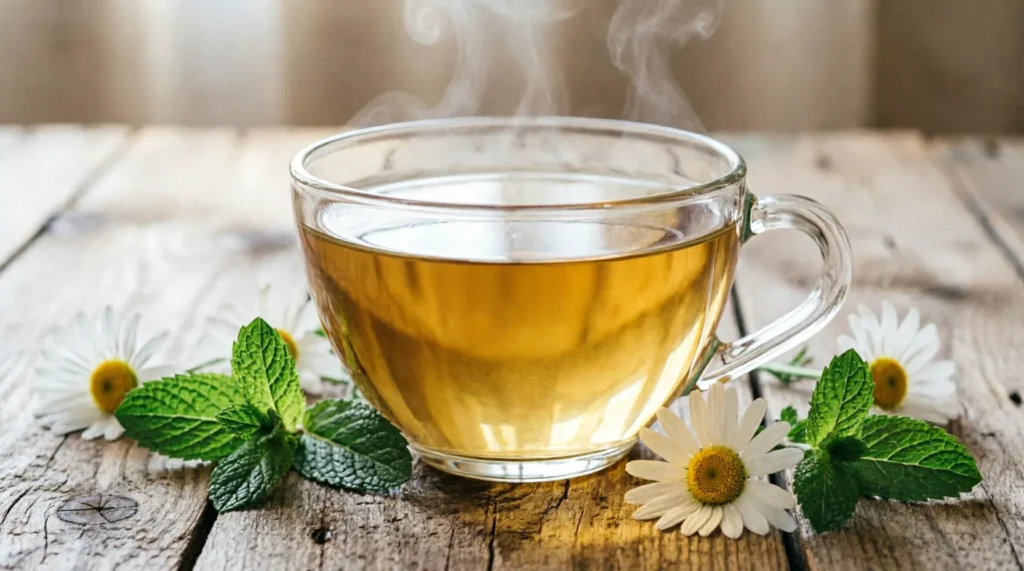
Quick answer: Both teas are excellent, but they serve different primary purposes. Choose chamomile if your main goal is relaxation and sleep aid; choose peppermint if you need relief from digestive issues like bloating or indigestion. Neither is “better” universally—the right choice depends entirely on your specific symptom at that moment.
The debate between chamomile and peppermint tea is one of the most common dilemmas in the herbal wellness world. Both are caffeine-free, widely available, and deeply rooted in historical medicinal practices. However, confusing their distinct physiological effects can lead to suboptimal results. If you drink peppermint when you need deep sedation, you might find yourself alert rather than asleep. If you drink chamomile when you have severe acid reflux, you might inadvertently worsen the heartburn. Understanding the specific biochemical profiles of these two herbs allows you to make a precise, effective choice for your health needs.
| Term | Meaning / When to use | Example sentence |
|---|---|---|
| Chamomile | Best for anxiety, insomnia, and mild skin irritation. Contains apigenin, which binds to brain receptors to promote sleepiness. | “I drank a cup of chamomile tea before bed to help calm my racing thoughts.” |
| Peppermint | Best for digestive distress, bloating, nausea, and tension headaches. Contains menthol, which relaxes gastrointestinal muscles. | “After the heavy holiday meal, I brewed peppermint tea to soothe my stomach ache.” |
When to Use Chamomile
Chamomile is the gold standard for evening rituals and stress management. Derived from the daisy-like flowers of the Asteraceae plant family, it has been used for centuries as a gentle sedative. According to Chamomile, the herb is primarily valued for its anti-inflammatory and antispasmodic properties, but its most famous application remains its ability to induce calmness.
The key active compound in chamomile is apigenin, an antioxidant that binds to specific receptors in your brain that may decrease anxiety and initiate sleep. This makes it uniquely suited for situations where mental chatter prevents physical rest. It is not a heavy tranquilizer; rather, it takes the edge off, allowing your natural sleep cycle to take over.
Here are three specific scenarios where I recommend chamomile without hesitation:
- Pre-Sleep Routine: If you struggle with falling asleep due to mild anxiety or an overactive mind, chamomile is superior. For example, a client once told me she replaced her nighttime wine with chamomile tea and reported falling asleep 20 minutes faster within a week. The ritual itself signals to the body that the day is ending.
- Menstrual Cramp Relief: Because of its antispasmodic nature, chamomile can help relax the uterus muscles. A practical example would be keeping a thermos of strong chamomile tea at your desk during the first day of your cycle to manage mild cramping without reaching for pharmaceutical painkillers immediately.
- Generalized Anxiety Management: During high-stress periods, such as exam weeks or major project deadlines, sipping chamomile throughout the afternoon can lower cortisol levels. Imagine sending a stressful email and then immediately brewing a cup of chamomile; the act serves as a physiological brake pedal.
When to Use Peppermint
Peppermint tea is a powerhouse for the gastrointestinal tract. Made from the leaves of the peppermint plant, a hybrid cross between watermint and spearmint, its primary active ingredient is menthol. Menthol provides the characteristic cooling sensation and acts as a natural analgesic and muscle relaxant.
While chamomile works on the brain, peppermint works largely on the gut. It helps bile flow, which speeds up digestion, and relaxes the smooth muscles of the intestines. This makes it incredibly effective for functional digestive disorders. However, this same muscle-relaxing property can be detrimental for certain conditions, such as GERD (gastroesophageal reflux disease), because it can relax the esophageal sphincter and allow acid to escape upward.
Here are three concrete instances where peppermint is the clear winner:
- Post-Meal Bloating: If you have eaten a large, fatty, or fiber-rich meal and feel uncomfortably full, peppermint tea aids digestion. For instance, after a heavy barbecue lunch where you ate several burgers, drinking peppermint tea can help move food through the digestive tract more efficiently, reducing that “stuffed” feeling.
- Nausea and Motion Sickness: The aromatic compounds in peppermint can settle an upset stomach quickly. A real-world example is keeping peppermint tea bags in your travel kit. If you feel queasy on a long flight or car ride, the scent and taste of menthol can override the nausea signals sent to the brain.
- Tension Headaches: While often consumed, peppermint can also be used topically or inhaled, but drinking it helps too. The menthol improves blood flow and provides a cooling effect. If you are sitting at a computer and feel a tension headache forming behind your eyes, a hot cup of peppermint tea can provide relief by relaxing the tightened muscles in your neck and head.
It is worth noting the botanical distinction here. As detailed in Peppermint, the plant is sterile and must be propagated vegetatively, ensuring that the menthol content remains consistent across commercial crops. This consistency means you can rely on peppermint tea to deliver a predictable dose of menthol every time you brew it.
How to Remember the Difference
The confusion between these two teas often stems from their shared status as “calming” herbal remedies. However, they calm different systems. To keep them straight, I use a simple sensory mnemonic based on their primary active components and physical sensations.
Think “Calm Mind” vs. “Cool Gut.”
- Chamomile = Calm Mind: The word “Chamomile” starts with “C,” just like “Calm” and “Comfort.” It is soft, floral, and gentle. It targets the nervous system. If you are stressed, anxious, or tired, think of the flower closing at night. You want the gentle, sedative effect of the flower.
- Peppermint = Cool Gut: The word “Peppermint” contains “Mint,” which is associated with cold, sharp, and refreshing sensations. Menthol is physically cooling. It targets the digestive system. If you are bloated, nauseous, or have a headache, think of the sharp, icy sensation of mint clearing your sinuses and soothing your stomach.
Another editor-level trick I use is to look at the color of the dry herb. Chamomile flowers are yellow and white, resembling the sun and moon—celestial bodies associated with cycles and rest. Peppermint leaves are deep green, associated with vitality and digestion. If you need to rest, go for the yellow/white flower. If you need to process and move, go for the green leaf.
Common Mistakes and Exceptions
Even with the right intentions, people often misuse these teas by ignoring specific medical contraindications. Here are the most frequent errors I see in health forums and client consultations.
1. Drinking Peppermint for Acid Reflux This is the most dangerous common mistake. Many people assume that because peppermint soothes the stomach, it will soothe heartburn. In reality, peppermint relaxes the lower esophageal sphincter. If you suffer from GERD or frequent heartburn, peppermint tea can make your symptoms significantly worse. In this case, chamomile is the safer choice, as it does not relax the sphincter and has mild anti-inflammatory effects on the esophageal lining.
2. Assuming Chamomile Is Safe for Everyone Chamomile is part of the Asteraceae family, which includes ragweed, chrysanthemums, marigolds, and daisies. If you have severe allergies to any of these plants, you may experience an allergic reaction to chamomile, ranging from mild skin irritation to anaphylaxis in rare cases. Always test a small amount first if you have known pollen allergies.
3. Using Teas as Substitutes for Medical Care While both teas are powerful supportive tools, they are not cures for chronic conditions. I once reviewed a resume for a health coach who claimed peppermint tea “cured” IBS. This is misleading. Peppermint manages symptoms; it does not cure the underlying condition. Similarly, chamomile helps with occasional insomnia but is not a treatment for clinical sleep disorders like sleep apnea.
4. Brewing Temperature Errors To get the full benefit, you must brew them correctly. Chamomile requires boiling water to extract the apigenin effectively, and it should steep for at least 5–10 minutes covered. Peppermint also needs boiling water, but covering the cup is crucial to prevent the volatile menthol oils from evaporating with the steam. If you leave your peppermint tea uncovered, you lose the very compound that provides the therapeutic benefit.
Frequently Asked Questions
Can I mix chamomile and peppermint tea together? Yes, you can mix them, and many commercial blends do exactly this. This combination offers both digestive support and mild relaxation. However, if you have acid reflux, avoid the peppermint component. If you need deep sleep, the peppermint might be too stimulating for some individuals, so monitor how your body reacts.
Is it safe to drink these teas every day? For most healthy adults, drinking 1–3 cups of either tea daily is considered safe. Chamomile has been used historically for long-term consumption without significant side effects. Peppermint is also safe for daily use, but if you notice increased heartburn, reduce or eliminate it. Always consult a healthcare provider if you are pregnant, nursing, or taking prescription medications, as herbal compounds can interact with drugs.
Which tea is better for weight loss? Neither tea directly burns fat, but both can support weight management indirectly. Peppermint can suppress appetite and reduce bloating, making you feel lighter. Chamomile can reduce stress-induced eating by lowering cortisol levels. The “better” choice depends on whether your weight challenges are related to stress eating (chamomile) or digestive sluggishness (peppermint).
Does peppermint tea keep you awake? Peppermint tea is caffeine-free, so it does not stimulate the central nervous system like coffee or black tea. However, the invigorating scent of menthol can be alerting for some people. If you are sensitive to strong smells or find the cooling sensation refreshing rather than relaxing, it might interfere with your wind-down routine. In such cases, stick to chamomile for evening consumption.

Brian Garcia has always been fascinated by the intricacies of the English language. With a Master’s degree in English Literature from the University of Chicago and over 15 years of experience in the field, Brian has dedicated his career to unraveling the complexities of word usage, comparisons, and spelling. His expertise lies in breaking down commonly confused words, helping readers gain clarity and confidence in their language skills. What drew Brian to this field was his passion for storytelling and his love for the art of communication. As a content creator for WordCompareHub, he focuses on engaging readers with insightful articles that demystify tricky word pairs and offer practical spelling tips. In his free time, Brian enjoys delving into etymology and exploring the evolution of words through history.