

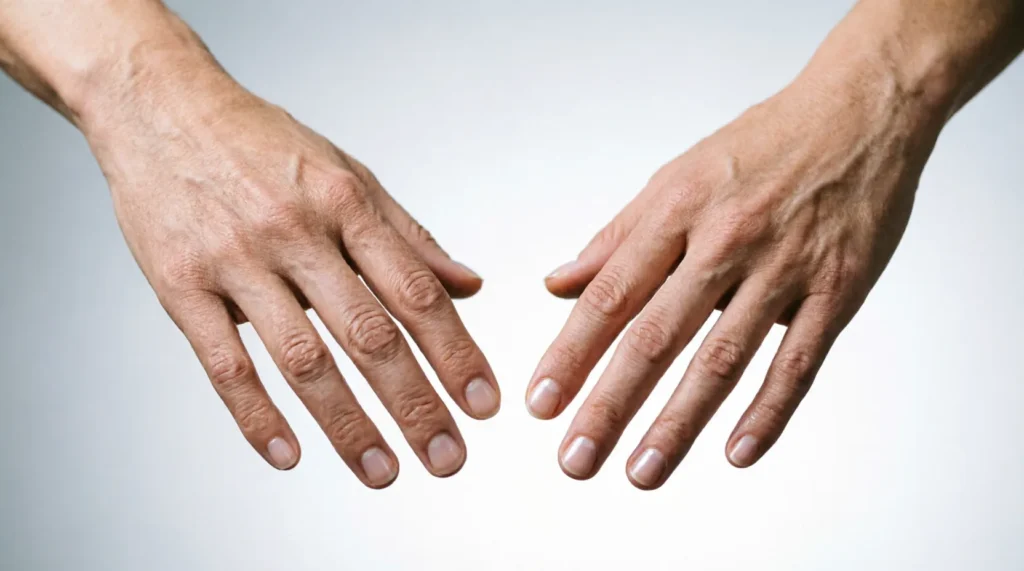
Quick answer: “Lefty” is a colloquial noun for a left-handed person, while “righty” is the equivalent term for a right-handed person. In directional contexts (like tightening screws), “lefty-loosey, righty-tighty” is the universal mnemonic. Neither word is formal; use “left-handed” or “right-handed” in professional writing.
The confusion between these two terms rarely stems from not knowing which hand is which. Instead, it arises from uncertainty about register—when it is appropriate to use these playful, informal labels versus when you must stick to clinical or standard terminology. As an editor who has reviewed thousands of manuscripts, I see “lefty” slip into formal bios and “righty” appear in technical manuals where precision matters more than charm. Understanding the distinct cultural and mechanical meanings of these words ensures your writing lands with the intended tone, whether you are describing a baseball pitcher or instructing someone on how to assemble furniture.
| Term | Meaning / When to use | Example sentence |
|---|---|---|
| Lefty | Informal noun for a left-handed person; also refers to the direction “left” in mechanical mnemonics. | “The team’s star pitcher is a notorious lefty.” |
| Righty | Informal noun for a right-handed person; also refers to the direction “right” in mechanical mnemonics. | “Most scissors are designed for the average righty.” |
When to use Lefty
“Lefty” functions primarily as a colloquial label for individuals who prefer using their left hand for tasks like writing, throwing, or eating. It carries a casual, sometimes affectionate tone. You will frequently encounter this term in sports journalism, particularly in baseball, where handedness dictates strategic matchups. A “lefty” pitcher throws with their left hand, creating a different angle for batters.
However, outside of sports and casual conversation, the term can feel reductive. In professional contexts such as resumes, medical forms, or academic papers, “left-handed” is the required standard. Using “lefty” in a formal bio might suggest a lack of seriousness or attention to detail.
Consider these examples where the choice of word changes the perception of the text:
- Casual Text Message: “Hey, can you grab the lefty gloves from the closet? I forgot mine.” (Appropriate usage; the context is informal and specific to sports gear.)
- Resume Error: “I am a creative lefty with strong problem-solving skills.” (Incorrect register; this should read “I am a left-handed creative…”)
- Sports Commentary: “The manager brought in a lefty to face the left-handed batter.” (Correct usage; this is standard jargon in baseball analytics.)
The term also appears in the famous mnemonic “lefty-loosey,” used to remember that turning a screw or bolt counter-clockwise (to the left) loosens it. In this mechanical context, “lefty” is not referring to a person but to the direction of rotation. This dual meaning—person and direction—makes “lefty” a versatile but potentially ambiguous word if the context is not clear.
When to use Righty
“Righty” mirrors “lefty” as the informal counterpart to “right-handed.” It is less common in sports jargon because right-handedness is the statistical norm, so it rarely requires special labeling. You might hear a coach say, “We need a righty in the batter’s box,” but it is far more likely to hear simply “batter” unless the handedness is strategically relevant.
In everyday conversation, “righty” often serves as a friendly acknowledgment or a quick confirmation. For instance, if someone asks, “You’re sitting on the right side, right?” a common response is “Righty!” This usage is purely conversational and should never appear in written formal communication.
Like its counterpart, “righty” plays a crucial role in mechanical instructions via the phrase “righty-tighty.” This reminds users that turning a fastener clockwise (to the right) tightens it. This application is universal across trades, from plumbing to automotive repair.
Here are realistic scenarios illustrating proper and improper use:
- Workplace Email: “Please ensure the righty staff members attend the meeting.” (Incorrect; this sounds awkward and informal. Use “right-handed staff” if handedness is relevant, though it rarely is in general meetings.)
- DIY Instruction: “Turn the valve righty-tighty until it stops.” (Correct; this is a widely accepted informal instruction in manual tasks.)
- Casual Conversation: “I’m a righty, so I always struggle with left-handed scissors.” (Appropriate; the tone is personal and informal.)
It is worth noting that the concept of “meaning” itself is complex and context-dependent. As explored in philosophical and linguistic discussions, words derive their significance from usage and convention Meaning. In the case of “righty,” the meaning is firmly anchored in informal social interaction and mechanical mnemonics, rather than formal definition.
How to remember the difference
The easiest way to distinguish these terms is to recognize that they are parallel constructions. If you know one, you know the other. They are both formed by adding the diminutive suffix “-y” to the direction. This suffix often implies smallness, familiarity, or affection, which explains why these terms feel casual.
To remember when not to use them, apply the “Job Interview Test.” If you would not say the word in a job interview for a corporate position, do not write it in a formal document. You would not tell an interviewer, “I’m a lefty,” as your primary identifier. You would say, “I am left-handed.” Therefore, reserve “lefty” and “righty” for texts, sports chats, and DIY projects.
For the mechanical mnemonic, visualize your hands. Make a thumbs-up gesture with your right hand. Your thumb points up, and your fingers curl in the direction of “tightening” (clockwise). This is “righty-tighty.” Do the same with your left hand; your fingers curl in the direction of “loosening” (counter-clockwise). This is “lefty-loosey.” This physical trick is more reliable than trying to recall the words alone, especially under pressure.
Common mistakes and exceptions
One of the most frequent errors I encounter is the use of these terms in inclusive language policies. Some organizations attempt to replace “left-handed” with “lefty” in official documents to sound more approachable. This often backfires, appearing patronizing rather than inclusive. Professionalism requires precision, not cuteness. Stick to “left-handed” and “right-handed” in any document that will be archived, shared with clients, or used for legal purposes.
Another exception arises in political contexts. Historically, “lefty” has been used as a pejorative slang term for someone with left-wing political views. Similarly, “righty” can refer to someone with right-wing views. This political connotation is entirely separate from handedness. If you are writing about politics, be aware that “lefty” carries baggage. It is often used dismissively. In contrast, “left-hander” is neutral. Always choose the neutral term unless you are intentionally invoking the slang tone.
There is also a regional variation in how these terms are perceived. In some British English contexts, diminutives ending in “-y” are more common in casual speech than in American English. However, even in the UK, formal writing standards discourage their use. The term “righty” specifically has roots in informal British usage, often appearing in phrases like “righty-ho” as an affirmation Righty. Understanding this etymological nuance helps explain why “righty” might feel slightly more natural as a standalone exclamation (“Righty!”) compared to “lefty,” which almost always requires a noun modifier (“lefty pitcher”).
A subtle but important distinction exists in sports statistics. While “lefty” is common in baseball, it is rare in cricket or tennis commentary, where “left-hander” or “left-handed player” is preferred. This is because baseball has a unique strategic dynamic based on pitcher-batter handedness matchups that is less pronounced in other sports. Using “lefty” in a tennis article might mark you as an outsider to that specific sport’s culture.
Frequently Asked Questions
Is “lefty” considered offensive? No, “lefty” is generally not offensive when referring to handedness, but it is informal. It can be pejorative in political contexts. In professional settings, it may be seen as unprofessional rather than offensive.
Can I use “righty” in a formal email? No. Use “right-handed” if you must specify handedness, though it is rarely necessary in business communication. “Righty” is too casual for professional correspondence.
What does “lefty-loosey, righty-tighty” mean? It is a mnemonic device for remembering how to turn screws and bolts. Turning left (counter-clockwise) loosens them, and turning right (clockwise) tightens them.
Are there other words like “lefty” and “righty”? Yes, English uses the “-y” suffix to create informal variants of many words, such as “doggy” for dog or “kiddy” for child. These follow the same rule: they are affectionate or casual and should be avoided in formal writing.

Brian Garcia has always been fascinated by the intricacies of the English language. With a Master’s degree in English Literature from the University of Chicago and over 15 years of experience in the field, Brian has dedicated his career to unraveling the complexities of word usage, comparisons, and spelling. His expertise lies in breaking down commonly confused words, helping readers gain clarity and confidence in their language skills. What drew Brian to this field was his passion for storytelling and his love for the art of communication. As a content creator for WordCompareHub, he focuses on engaging readers with insightful articles that demystify tricky word pairs and offer practical spelling tips. In his free time, Brian enjoys delving into etymology and exploring the evolution of words through history.