

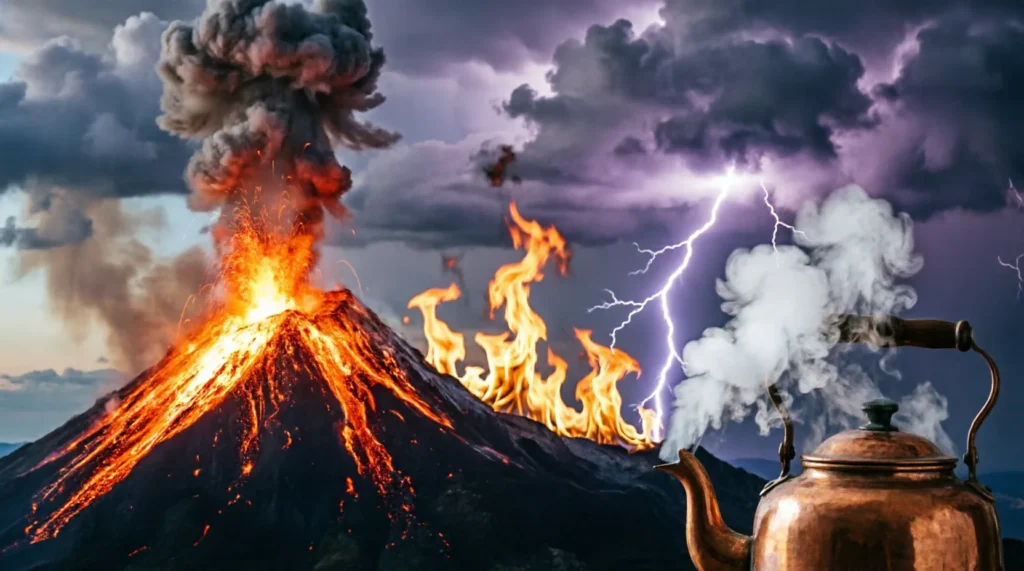
Quick answer: Good similes for anger compare the feeling to explosive, hot, or pressurized things—like “angry as a hornet,” “hot as a boiling kettle,” or “fuming like a volcano.” These comparisons work because they translate the internal physical sensation of rage into concrete, relatable imagery.
Anger is one of the most universal human emotions, yet it remains notoriously difficult to describe accurately in writing. When we try to articulate rage, we often default to generic adjectives like “mad” or “furious,” which fail to capture the visceral intensity of the experience. This is where similes become essential tools for writers. By comparing anger to familiar physical phenomena, you allow readers to feel the heat, pressure, and volatility of the emotion rather than just being told it exists.
According to Wikipedia, anger is a strong emotional response that can range from mild irritation to intense fury and rage, often involving physiological changes such as increased heart rate and blood pressure. To convey this complexity, you need comparisons that mirror those biological shifts. In this guide, I will break down the best similes for anger, categorized by the specific type of rage you are trying to depict, so you can choose the perfect phrase for your context.
| Term / Category | Meaning / When to use | Example sentence |
|---|---|---|
| Explosive Anger | For sudden, violent outbursts that happen quickly and destructively. | “He exploded like a grenade pin pulled in a quiet room.” |
| Simmering Anger | For low-level, sustained resentment that threatens to boil over. | “Her silence was heavy, simmering like a pot left on high heat.” |
| Cold Anger | For controlled, calculated rage that feels dangerous and precise. | “His voice was sharp and cold, cutting like shattered glass.” |
| Animalistic Anger | For primal, instinctual rage that bypasses logic. | “She snarled like a cornered wolf, eyes wide and wild.” |
| Natural Force Anger | For overwhelming rage that feels uncontrollable and vast. | “The storm of his temper hit like a hurricane making landfall.” |
When to Use Explosive Similes
Explosive similes are best reserved for moments of sudden, high-intensity rage. These comparisons focus on speed, volume, and destruction. They are ideal for scenes where a character loses control instantly, perhaps due to a shocking betrayal or a sudden provocation. The key element here is the transition from calm to chaos in a split second.
I often see writers struggle with these scenes because they tell us the character yelled, but they don’t make us feel the shockwave. Using an explosive simile bridges that gap. It anchors the abstract emotion in a physical reality that the reader understands instinctively.
- “He erupted like a volcano after centuries of dormancy.” Use this when the anger has been building for a long time but the outburst is sudden and catastrophic. It implies that the damage is done and cannot be undone.
- “She snapped like a dry twig underfoot.” This is perfect for a brittle, fragile kind of rage. It suggests the character was already at their breaking point, and the final straw caused a sharp, audible break in their composure.
- “His temper blew up like a faulty firework.” This works well for anger that is loud and flashy but perhaps lacks deep, sustained power. It’s chaotic, dangerous, but potentially short-lived.
In my years editing manuscripts, I’ve noticed that explosive similes are most effective when paired with action beats. Don’t just say he was angry; show the explosion. For example, in a resume cover letter, you wouldn’t use this, but in a thriller novel, you might write: “The manager slammed his hand on the desk, exploding like a bomb in the sterile office silence.” The contrast between the “sterile office” and the “bomb” heightens the impact.
When to Use Simmering and Cold Similes
Not all anger is loud. In fact, some of the most terrifying rage is quiet. Simmering and cold similes are used to describe anger that is contained, controlled, or suppressed. These comparisons are crucial for building tension. They suggest that while the character is not yelling, the danger is still present, perhaps even more so because it is focused.
Simmering anger is about potential energy. It is the threat of what could happen if the lid is removed. Cold anger is about kinetic precision. It is the ice that burns. These similes help you differentiate between a character who is losing control and a character who has too much control.
- “He fumed like a tea kettle just before the whistle.” This is a classic domestic simile that everyone understands. It implies high pressure, rising heat, and an inevitable release. It’s great for scenes of domestic tension or workplace frustration where social norms prevent an outright scream.
- “Her gaze was icy, freezing the air like liquid nitrogen.” Use this for calculated rage. This isn’t about losing your temper; it’s about using anger as a weapon. It conveys a sense of detachment and cruelty.
- “The resentment sat in his chest like a stone in a riverbed.” This is a slower, heavier type of anger. It’s not going anywhere. It’s permanent, eroding, and heavy. Use this for long-standing grudges or deep-seated bitterness.
Consider this example from a text message scenario in a contemporary drama: “I’m not yelling, but my patience is wearing thin like an old rope.” This simile communicates that the connection is fraying and a break is imminent, without the character actually raising their voice. It’s subtle, but it carries weight.
How to Remember the Difference
Choosing the right simile depends on the temperature and velocity of the anger. Here is a simple editor’s trick I use to help writers select the right comparison: The Thermometer Test.
Ask yourself two questions:
- Is it Hot or Cold? Hot anger is reactive, messy, and emotional. Cold anger is proactive, clean, and strategic.
- Is it Fast or Slow? Fast anger explodes. Slow anger simmers or corrodes.
If the anger is Hot and Fast, use explosive similes (volcanoes, grenades, fireworks). If the anger is Hot and Slow, use simmering similes (boiling pots, steam, pressure cookers). If the anger is Cold and Fast, use sharp similes (glass, knives, ice shards). If the anger is Cold and Slow, use heavy similes (stones, icebergs, shadows).
This framework prevents you from mixing metaphors. You wouldn’t describe a cold, calculated villain as “exploding like a firework” unless they were losing control. Conversely, you wouldn’t describe a child’s tantrum as “simmering like a stone.” Matching the physics of the simile to the psychology of the character ensures consistency and believability.
Common Mistakes and Exceptions
One of the most common mistakes I see is the use of clichéd similes that have lost their impact. Phrases like “angry as a bear” or “mad as a hatter” are so overused that readers glide right over them. They no longer evoke an image; they are just placeholders for “very angry.” To write compelling prose, you must dig deeper. Instead of a bear, is the character angry like a trapped badger? Like a swan protecting its nest? Specificity breeds authenticity.
Another mistake is mismatching the scale of the simile to the situation. If a character is annoyed because their coffee is cold, comparing their anger to “a nuclear meltdown” is hyperbolic and breaks immersion. Save the nuclear similes for life-altering betrayals. For minor irritations, use smaller, more relatable comparisons: “irritated like a mosquito buzz in a quiet library.”
It is also important to note cultural differences in anger metaphors. While English often uses heat and pressure metaphors (boiling, exploding), other languages may use different physical sensations. However, since we are writing in English, sticking to widely understood physical phenomena ensures your audience connects with the emotion immediately. According to Wikipedia, a simile is a figure of speech that directly compares two different things, usually employing the words “like” or “as.” The effectiveness of the simile relies entirely on the reader’s ability to recognize the shared characteristic between the two things. If the comparison is too obscure, the simile fails.
Finally, avoid mixing metaphors in a single sentence. Do not write: “He was boiling with rage, exploding like a bomb, and cold as ice.” Pick one dominant physical sensation and stick with it. Consistency creates clarity.
Frequently Asked Questions
What is the difference between a simile and a metaphor for anger? A simile compares anger to something else using “like” or “as” (e.g., “angry like a storm”), while a metaphor states that anger is that thing (e.g., “he was a storm”). Similes are often clearer for direct description, while metaphors can be more poetic and immersive.
Can I use similes for anger in professional writing? Generally, no. Professional writing, such as business emails or reports, should remain objective and literal. Similes are literary devices best suited for creative writing, storytelling, or persuasive essays where emotional resonance is the goal.
How do I make my anger similes unique? Avoid common animals (bears, bulls) and generic elements (fire). Look to specific, unexpected sources: machinery, weather patterns, medical conditions, or household objects. The more specific the source, the more vivid the image. For example, “angry like a jammed printer” is more relatable in a modern office context than “angry like a lion.”
Why are heat-based similes so common for anger? Heat-based similes are common because anger triggers a physiological response that raises body temperature, blood pressure, and heart rate. We literally feel “hot” when we are angry, making comparisons to fire, boiling water, and volcanoes biologically intuitive and universally understood.

Nathan Williams is a seasoned editor and writer with a passion for the subtleties of the English language. With a degree in English from NYU and more than 12 years of editorial experience, he has honed his expertise in spelling accuracy and the comparison of often-misused words. Nathan’s foray into language analysis was sparked by his desire to help others communicate more effectively and avoid common pitfalls in writing. At WordCompareHub, he crafts comprehensive guides and articles that discuss word usage distinctions and provide effective spelling strategies. Nathan is driven by the belief that clarity in language is key to effective communication. In his leisure time, he enjoys crosswords and participates in local word games, continually expanding his lexicon and sharpening his linguistic skills.