

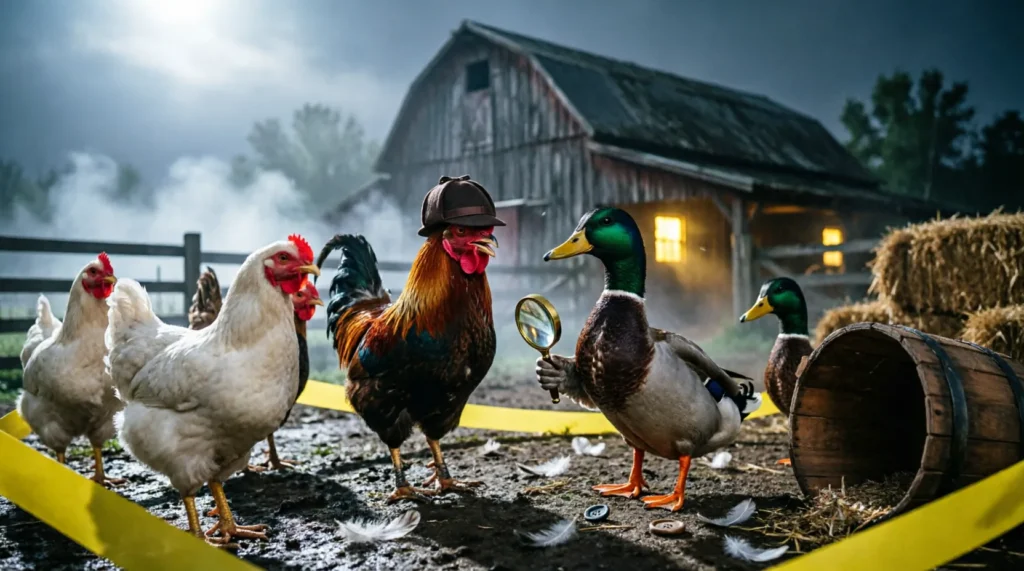
Quick answer: Use foul when referring to something dirty, unpleasant, illegal, or against the rules. Use fowl only when referring to birds, particularly domesticated poultry like chickens and ducks. “Foul play” is the correct spelling for suspicious or criminal activity; “fowl play” is a common but incorrect pun unless you are literally writing about misbehaving birds.
These two words are homophones—they sound exactly the same—but their meanings could not be more different. I have spent fifteen years as a copy editor, and I still see this mix-up in professional emails, news headlines, and student essays. It is an easy mistake to make because our brains often prioritize sound over spelling when we write quickly. However, getting it wrong can change your meaning from “criminal investigation” to “chicken coop,” which rarely helps your credibility.
| Term | Meaning / When to use | Example sentence |
|---|---|---|
| Foul | Dirty, disgusting, offensive, or violating rules (sports/law). | The detective suspected foul play in the disappearance. |
| Fowl | Birds, especially domesticated ones raised for meat or eggs. | The farm specializes in raising organic fowl like turkeys and geese. |
When to use Foul
The word foul is an adjective, noun, and verb that generally carries a negative connotation. It describes something that is physically dirty, morally offensive, or legally irregular. In sports, it refers to an unfair act. In legal or mystery contexts, it refers to criminal activity.
According to Wikipedia, the term has deep roots in describing things that are offensive to the senses or contrary to the rules of a game. You will encounter this word most often in three specific contexts: weather/smell, sports violations, and criminal suspicion.
Here are clear examples of how to use foul correctly:
- Criminal Context: “The police ruled out foul play after finding no signs of struggle at the scene.” (This is the most common source of the “fowl vs foul” confusion.)
- Sports Context: “The referee called a foul on the defender for pushing the shooter.”
- Sensory Context: “A foul odor drifted from the basement, suggesting a sewage leak.”
I recently edited a press release for a local security firm that originally read: “We ensure your home is safe from fowl intent.” This was embarrassing for the client. They were not protecting homes from angry ducks; they were protecting them from criminals. The fix was simple: change “fowl” to “foul.” The phrase “foul play” is a fixed idiom in English. It always uses the spelling with the “u.” If you are writing about murder, theft, or cheating, you must use foul.
Another common area where I see errors is in descriptions of weather or mood. A “foul day” is rainy and miserable. A “foul mood” is angry and irritable. In every single one of these cases, the word relates to negativity, dirtiness, or rule-breaking. If you can replace the word with “nasty,” “dirty,” or “illegal,” you need foul.
When to use Fowl
The word fowl is a noun. It refers specifically to birds. While it can technically refer to any bird, in modern usage, it almost exclusively refers to domesticated poultry kept for meat or eggs. This includes chickens, turkeys, ducks, geese, and guinea fowl.
As noted in linguistic resources such as Wikipedia, the term is often used in agricultural, culinary, or hunting contexts. It is a collective term. You would not typically point at a sparrow in your backyard and call it “fowl” in casual conversation, but you would absolutely refer to the chickens in your coop as “fowl.”
Here are clear examples of how to use fowl correctly:
- Agricultural Context: “The farmer woke up early to feed the fowl before checking the crops.”
- Culinary Context: “The menu featured roasted fowl with herbs and root vegetables.”
- Hunting Context: “Waterfowl hunters gathered at dawn to track migratory fowl.”
A recent resume I reviewed listed a candidate’s experience as: “Managed daily operations for a large-scale foul production facility.” This suggested the candidate was running a factory that produced something disgusting or illegal. In reality, they worked at a chicken processing plant. The correct phrasing was “fowl production.” This single letter difference changed the entire perception of their professional background.
It is important to note that “fowl” is somewhat formal. In everyday speech, people usually say “chickens,” “turkeys,” or “birds.” However, in writing, especially in industries related to farming, food service, or biology, “fowl” is the precise technical term. If you are writing about feathers, beaks, eggs, or coops, you are likely dealing with fowl.
One tricky area is compound words. We have “waterfowl” (ducks, geese, swans) and “wildfowl.” Notice that these compounds always use the “w” spelling. There is no such word as “waterfoul.” If you are describing birds that live on water, it is always fowl.
How to remember the difference
The most effective way to keep these two straight is to look at the vowels. This is a visual trick that I teach to all my junior editors.
Fowl contains the letter W. Think of Wings. Birds have wings. Therefore, fowl = birds.
Foul contains the letter U. Think of Ugly or Unsanitary. Things that are foul are ugly, smelly, or bad. Therefore, foul = nasty/illegal.
Another mnemonic involves the phrase “Foul Play.” Imagine a soccer player committing a dirty trick. That is foul (bad/illegal). Now imagine a chicken trying to play soccer. That is fowl (bird) play. Unless you are writing a children’s book about athletic poultry, you want the first one.
I also recommend remembering the word “Poultry.” Both “Poultry” and “Fowl” refer to birds. Neither word contains a “u” in the sense of “ugly,” but “Fowl” shares the “owl” sound. Owls are birds. Fowl are birds. This auditory link can help if you are dictating or listening, but the visual “W for Wings” is superior for writing.
Let’s apply this to a real-world editing scenario. Suppose you are writing a text message to a friend about a bad date.
- Incorrect: “He had such fowl breath I couldn’t stay.”
- Correction: “He had such foul breath I couldn’t stay.” (Breath is ugly/smelly, so use U).
Now, suppose you are writing an email to a caterer.
- Incorrect: “Please confirm the order for the roasted foul.”
- Correction: “Please confirm the order for the roasted fowl.” (Chicken/turkey has wings, so use W).
Common mistakes and exceptions
The most frequent mistake is using “fowl” in the phrase “foul play.” This error appears surprisingly often in amateur crime fiction and local news blogs. Because “fowl” is a less common word in daily conversation than “foul,” writers sometimes guess the spelling based on how it sounds, leading to the erroneous “fowl play.” Remember: Criminal activity is never avian. It is always foul.
Another common error occurs in sports reporting. A “foul shot” in basketball is a missed free throw, but a “foul” in soccer is a rule violation. Writers sometimes misspell this as “fowl,” implying the player turned into a bird. Always use foul for rule violations.
There are very few exceptions to these rules, but there are some archaic uses to be aware of. In Old English, the distinction was not as sharp, but in modern Standard English, the separation is rigid. You will not find a reputable dictionary that accepts “fowl” as an adjective meaning “dirty.”
One edge case is the word “fowling.” This is the act of hunting birds. It is derived from “fowl.” Do not spell it “fouling.” “Fouling” is a completely different word meaning to make something dirty or clogged (e.g., “fouling up the engine”).
- Fowling: Hunting birds.
- Fouling: Making something dirty or tangled.
If you are talking about a ship’s propeller getting tangled in seaweed, it is fouling. If you are talking about shooting ducks, it is fowling. The context determines the spelling, but the root meaning (birds vs. dirt) remains the key.
In US vs UK English, there is no significant difference in the spelling or meaning of these two words. Both varieties use foul for dirty/illegal and fowl for birds. However, the word “fowl” is perhaps slightly more common in UK English due to traditional culinary terminology (e.g., “old hen” vs “stewing fowl”), but the rule remains identical across the Atlantic.
Frequently Asked Questions
Is “fowl play” ever correct? No, “fowl play” is incorrect unless you are making a deliberate pun about birds committing crimes. In standard English, the phrase for suspicious or criminal activity is always spelled “foul play.”
Can “foul” be used as a verb? Yes, “foul” can be a verb meaning to make dirty or to commit a foul in sports. For example, “He fouled his shirt with grease” or “The player fouled out of the game.” “Fowl” is never a verb.
What is the plural of fowl? The plural of “fowl” is usually just “fowl” (e.g., “a flock of fowl”). However, “fowls” is also accepted in some contexts, particularly when referring to different types of birds. In contrast, “foul” does not have a plural form when used as an adjective, though “fouls” is the plural noun in sports (e.g., “three fouls”).
Why do people confuse fowl and foul? They are homophones, meaning they are pronounced exactly the same (/faʊl/). Because English spelling is not always phonetic, writers often choose the spelling that looks more familiar or guess incorrectly. The visual mnemonic of “W for Wings” is the best way to overcome this confusion.

Kimberly Sanchez holds a Bachelor’s degree in Linguistics from UCLA and has spent over a decade working as a language consultant and educator. Her journey in the world of words began with a curiosity about how language shapes our perception of the world. With a keen eye for detail and a knack for making complex concepts accessible, Kimberly specializes in the nuances of English word comparisons and their real-world implications. She joined WordCompareHub to share her insights on frequently confused words and to promote a deeper understanding of language accuracy. Kimberly writes content that is both enlightening and practical, aimed at readers who seek to enhance their communication skills. Outside of her professional pursuits, she is an avid reader and enjoys exploring multilingual environments to observe linguistic diversity in action.