

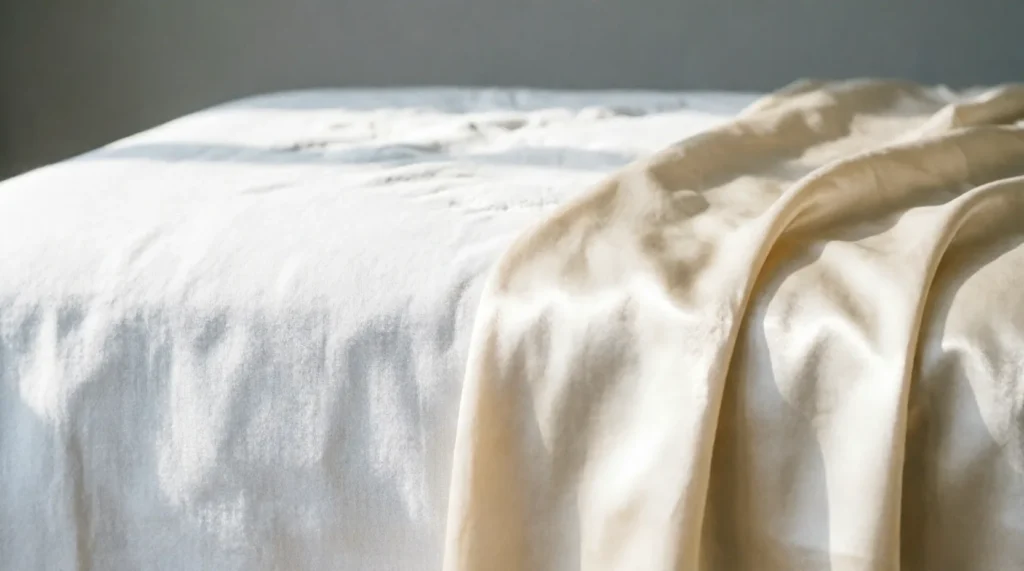
Quick answer: The difference between percale and sateen is the weave structure, not the fiber; percale uses a one-over-one-under plain weave for a crisp, cool, matte finish, while sateen uses a four-over-one-under satin weave that exposes more yarn surface for a silky drape and luminous sheen.
Shoppers frequently conflate these terms because they are often displayed side-by-side on bedding packaging, yet they describe fundamentally distinct textile architectures rather than variations in thread count or cotton quality. As a copy editor who has reviewed hundreds of home goods product descriptions, I see this confusion constantly in marketing copy where “sateen” is incorrectly used as a synonym for “high thread count,” leading to customer returns when the expected hand-feel does not match the fabric’s actual structural properties. Understanding the mechanical distinction between these two weaves eliminates guesswork and ensures you select sheets based on tactile performance rather than misleading labeling.
| Term | Meaning / When to use | Example sentence |
|---|---|---|
| Percale | A plain weave (1:1 ratio) producing a lightweight, breathable, matte-finish fabric with a crisp hand-feel. | “For hot sleepers who want cool, crunchy sheets that feel like a luxury hotel button-down shirt, choose percale.” |
| Sateen | A satin-weave variant (typically 4:1 ratio) creating a heavier, smoother fabric with visible luster and fluid drape. | “If you prefer buttery-soft sheets with a subtle shine and warmer insulation for winter nights, opt for sateen.” |
When to Use Percale
Percale is the correct term when describing a balanced plain weave where each warp yarn passes over and under each weft yarn in strict alternation. This 1:1 interlacing creates maximum structural integrity and air permeability, resulting in a fabric that feels cool against the skin and maintains a matte, non-reflective appearance even after repeated laundering. In my editing work for linen brands, I flag any product description calling percale “silky” or “shiny” as factually incorrect; those adjectives belong exclusively to sateen or true satin constructions.
- Hot sleeper bedding specs: “Our 300-thread-count organic cotton percale provides optimal airflow for temperature regulation during summer months.”
- Hospitality procurement documents: “Specify T-250 combed cotton percale for institutional laundry durability and consistent crispness after industrial pressing.”
- Consumer review responses: “The ‘stiff’ texture you noticed is characteristic of new percale; it softens significantly after three wash cycles without losing its cool, matte hand.”
When to Use Sateen
Sateen refers specifically to a weft-faced satin weave adapted for staple fibers like cotton, where multiple warp yarns (usually three or four) float over a single weft yarn before interlacing. These long floats expose more fiber surface to light, producing the signature lustrous sheen and smooth, almost liquid hand-feel that distinguishes sateen from plain-weave alternatives. According to Difference, in technical textile terminology this distinction is absolute: sateen is defined by its weave geometry, not by fiber content or thread count, meaning a 200-thread-count cotton sateen will always feel silkier than an 800-thread-count cotton percale.
- Luxury e-commerce product titles: “600TC Long-Staple Cotton Sateen Sheet Set — Buttery Soft with Subtle Luminous Sheen.”
- Bridal registry guidance emails: “Choose sateen if you want that romantic, photogenic sheen in bedroom photos and a warmer, heavier drape for cooler climates.”
- Customer service clarification scripts: “Sateen’s smooth surface comes from floating yarns, which also makes it slightly less breathable than percale but noticeably softer to the touch right out of the package.”
How to Remember the Difference
After years of correcting mislabeled product copy, I rely on a simple phonetic and visual mnemonic that never fails: Percale = Plain & Crisp; Sateen = Satin & Smooth. The word “percale” shares its hard “c” sound with “crisp” and “cool,” while “sateen” contains “sat,” directly linking it to “satin” and “silky.” Visually, remember that percale’s 1:1 weave looks like a checkerboard grid under magnification—uniform, tight, and flat—while sateen’s 4:1 float structure resembles diagonal ribbons lying across the fabric surface, catching light at angles that create sheen.
An editor-level insight most consumers miss: thread count is largely irrelevant to this comparison because weave structure dominates tactile experience. A 200TC sateen will consistently feel smoother and look shinier than a 600TC percale, yet I regularly see retailers positioning high-TC percale as the “premium soft” option purely based on numerical inflation. When evaluating samples, ignore the number and perform the thumbnail test: drag your thumbnail diagonally across the fabric. Percale will offer uniform resistance and no directional change in appearance; sateen will glide more easily along the float direction and show a visible shift in luster when viewed from different angles. This physical diagnostic beats any spec sheet every time.
Common Mistakes and Exceptions
The most pervasive error I encounter in both consumer writing and professional product copy is treating “sateen” and “satin” as interchangeable. They are not. True satin is woven from filament yarns (silk, polyester, nylon) using a warp-faced structure where the warp floats dominate the surface. Sateen is the staple-fiber adaptation using a weft-faced structure. Calling cotton sateen “cotton satin” is technically inaccurate and signals amateur sourcing knowledge in B2B contexts. Similarly, “percaline” is a distinct, lighter-weight plain weave sometimes confused with percale; it uses finer yarns and lower density, making it suitable for lining or lightweight apparel but not durable bed linens. For more, see Between.
Another frequent mistake involves assuming sateen’s sheen indicates synthetic content. Many shoppers reject sateen believing it must contain polyester, when in fact 100% cotton sateen achieves its luster entirely through weave geometry. Conversely, some percale marketed as “wrinkle-resistant” has been treated with chemical finishes that alter the natural crisp hand; purists seeking traditional percale should verify “untreated” or “no formaldehyde finish” claims. Regional terminology also causes confusion: UK heritage mills sometimes use “percale” loosely for any fine plain-weave cotton regardless of thread density, whereas US FTC guidelines require minimum 180 threads per inch for the term. Always check the actual weave specification, not just the label name, especially when sourcing internationally.
Finally, durability expectations are often inverted. Consumers assume sateen’s luxurious feel means fragility, but the long floats actually distribute stress across multiple yarns, making quality sateen surprisingly resilient to pilling. Percale’s tighter weave resists abrasion better but shows creasing more readily. I’ve edited countless return-policy pages where this was misrepresented, causing customers to avoid sateen unnecessarily. The real vulnerability in sateen is snagging from jewelry or pet claws due to exposed floats—a care instruction worth highlighting prominently rather than burying in fine print.
Frequently Asked Questions
Is higher thread count always better when choosing between percale and sateen? No; weave structure determines feel far more than thread count, so a 250TC sateen will typically feel softer and look shinier than a 600TC percale. Focus on weave type first, then use thread count only as a secondary refinement within the same weave category.
Can percale ever feel silky or develop a sheen over time? Genuine percale will soften with washing but should never become silky or shiny; if it does, the fabric is likely mislabeled sateen or a blended plain weave with mercerized yarns. True percale retains its matte, crisp character throughout its lifespan—that’s its defining feature, not a defect.
Which is better for hot sleepers: percale or sateen? Percale is objectively superior for hot sleepers due to its open 1:1 weave allowing greater air circulation and moisture wicking. Sateen’s floating yarn structure traps more warmth and reduces breathability, making it better suited for cool climates or sleepers who prefer weighted, insulating bedding.
Does the difference between percale and sateen affect how I should launder them? Yes; percale tolerates higher heat and aggressive tumbling, benefiting from occasional line-drying to preserve crispness, while sateen requires gentler cycles and low-heat drying to prevent float damage and maintain luster. Avoid fabric softener on both—it coats fibers and diminishes percale’s coolness and sateen’s natural sheen equally.

Brian Garcia has always been fascinated by the intricacies of the English language. With a Master’s degree in English Literature from the University of Chicago and over 15 years of experience in the field, Brian has dedicated his career to unraveling the complexities of word usage, comparisons, and spelling. His expertise lies in breaking down commonly confused words, helping readers gain clarity and confidence in their language skills. What drew Brian to this field was his passion for storytelling and his love for the art of communication. As a content creator for WordCompareHub, he focuses on engaging readers with insightful articles that demystify tricky word pairs and offer practical spelling tips. In his free time, Brian enjoys delving into etymology and exploring the evolution of words through history.