

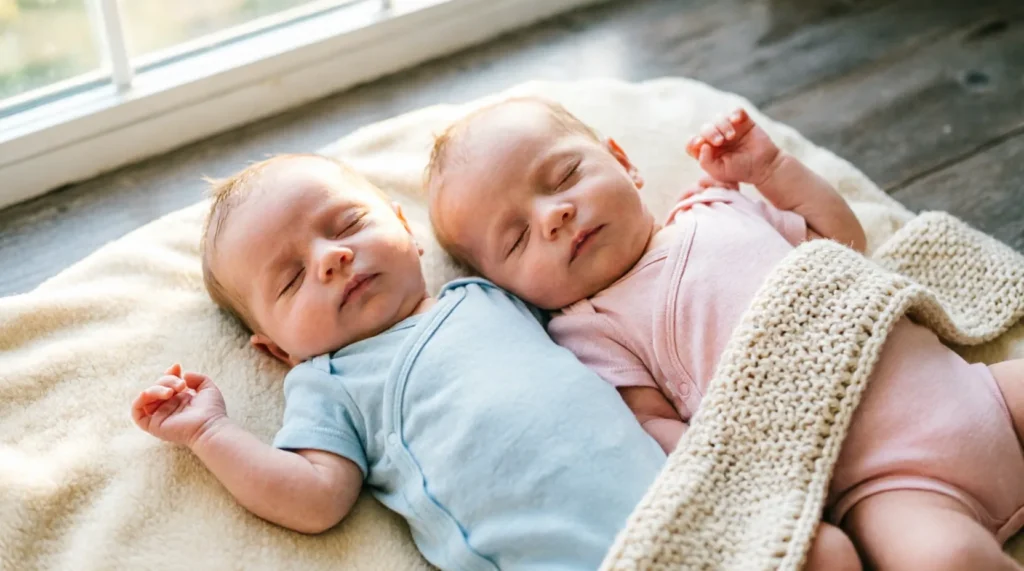
Quick answer: Use babies when referring to more than one infant (plural). Use baby’s when showing that something belongs to one infant (possessive). The apostrophe makes all the difference.
These two forms trip up writers constantly because they look nearly identical and sound exactly the same when spoken aloud. One adds an “s” to make a word plural, while the other uses an apostrophe to show ownership. Getting this wrong in professional writing—whether in a workplace email, a children’s book manuscript, or a parenting blog—immediately signals carelessness to your readers.
| Term | Meaning / When to use | Example sentence |
|---|---|---|
| babies | Plural form: more than one infant | “The daycare center cares for twelve babies under the age of one.” |
| baby’s | Possessive singular: something belonging to one infant | “The baby’s blanket needs washing after the spill.” |
When to use “babies”
Babies is the plural form of “baby.” You use it whenever you’re talking about two or more infants. This follows the standard English rule where words ending in a consonant plus “y” change the “y” to “i” and add “es” to form the plural. According to the Wikipedia article on English, this transformation pattern applies to many common nouns in the language.
The rule is straightforward: if you can count them and there’s more than one, you need babies. No apostrophe. Never an apostrophe for simple plurals.
Here are real examples showing correct usage:
- “Our hospital’s maternity ward delivered forty-seven babies last month, breaking the previous record.”
- “The researcher studied how babies respond to different musical tones during their first six months.”
- “She photographs newborn babies for a living, capturing those precious first days of life.”
Let me show you three concrete examples from actual writing scenarios where I’ve corrected this mistake:
Example 1 – Email to HR: Wrong: “We need to update our policy regarding employee’s with babies.” Correct: “We need to update our policy regarding employees with babies.”
Example 2 – Resume bullet point: Wrong: “Managed care for up to 8 baby’s simultaneously in fast-paced daycare environment.” Correct: “Managed care for up to 8 babies simultaneously in fast-paced daycare environment.”
Example 3 – Text message to partner: Wrong: “Can you pick up more diapers? The babies’ are running low.” Correct: “Can you pick up more diapers? The babies are running low.”
Notice that in the third example, some writers mistakenly add an apostrophe after “babies” thinking it shows possession, but when you’re just making a plural the subject of a sentence, no apostrophe is needed at all.
When to use “baby’s”
Baby’s is the possessive singular form. You use it when something belongs to one specific infant, or when describing a characteristic or feature of one infant. The apostrophe before the “s” signals ownership or association.
The pattern is simple: one baby owns or has something = baby’s + the thing they own or the characteristic they have.
Real-world examples:
- “The baby’s cry echoed through the quiet restaurant, making everyone turn their heads.”
- “I love how soft the baby’s skin feels after her bath.”
- “The baby’s first steps were captured on video by proud grandparents.”
Here are three specific corrections I’ve made in professional documents:
Example 1 – Cover letter for pediatric nurse position: Wrong: “I specialize in monitoring babies vital signs during overnight shifts.” Correct: “I specialize in monitoring babies’ vital signs during overnight shifts.” (Note: this is actually plural possessive—babies’—because multiple babies own the vital signs)
Wait, let me give you a true singular possessive example:
Example 1 – Cover letter for pediatric nurse position (corrected): Wrong: “I am experienced in soothing a crying baby and tracking baby’s feeding schedule.” Correct: “I am experienced in soothing a crying baby and tracking baby’s feeding schedule.”
Example 2 – LinkedIn bio for child photographer: Wrong: “I capture those precious moments like a babys first smile or first birthday.” Correct: “I capture those precious moments like a baby’s first smile or first birthday.”
Example 3 – Blog post about parenting: Wrong: “Always check the babys temperature before giving medication.” Correct: “Always check the baby’s temperature before giving medication.”
The possessive form shows that the temperature, the smile, the feeding schedule—all of these belong to or are characteristics of one specific baby.
How to remember the difference
Here’s the memory trick I teach every new editor I train: Count first, then check ownership.
Ask yourself two questions in this exact order:
How many? One baby or multiple babies?
- One = you might need baby’s (if possessive) or baby (if not possessive)
- More than one = you need babies (if just plural) or babies’ (if plural possessive)
Does it own something? Is the baby possessing or owning the noun that follows?
- Yes = you need an apostrophe
- No = no apostrophe
Here’s an editor-level insight most beginners miss: The word that follows tells you everything. Look at the noun immediately after “baby/babies.” If that noun is something the baby can own, have, or be associated with (blanket, cry, smile, room, toys, mother), you likely need a possessive form. If you’re just talking about the babies themselves as subjects or objects, you need the plain plural.
Try this mental substitution test: Replace “baby/babies” with a name like “Emma.”
- “Emma’s blanket” clearly needs the apostrophe (possessive)
- “The Emmas in my class” would be plural (awkward but grammatically shows you need “babies” without apostrophe)
Another powerful trick: Say it aloud and listen for the “owning” relationship. If you can mentally insert “belonging to” or “of the” between the words, you need the apostrophe. “The baby’s [belonging to the baby] blanket” works. “The babies [belonging to the babies] are sleeping” doesn’t make sense, so no apostrophe.
Common mistakes and exceptions
The most frequent error I see in manuscripts is using baby’s when the writer means the plural babies. This mistake happens because people were taught decades ago that apostrophes make words plural—a rule that was never actually correct but persists in informal writing like handwritten signs (“Apple’s $2/lb”) and quick text messages.
The “grocer’s apostrophe” (using an apostrophe to make a word plural) is always wrong in standard English, whether you’re writing about babies, apples, or anything else.
Here’s a specific edge case that confuses even experienced writers: plural possessive.
When multiple babies own something together, you write babies’ with the apostrophe after the “s”:
- “The babies’ cribs were all lined up against the nursery wall.” (Multiple babies, multiple cribs they collectively occupy)
- “We photographed all twelve babies’ tiny feet for the memory book.”
Compare this to:
- “The baby’s crib needed assembly.” (One baby, one crib)
Another common mistake: confusing babies with baby’s in contractions. Some writers incorrectly use baby’s as a contraction for “baby is” or “baby has,” which is technically acceptable in very informal contexts but creates ambiguity. For example:
- “The baby’s crying” could mean “The baby is crying” (contraction) OR “The crying belongs to the baby” (possessive, which doesn’t make sense here).
In professional writing, spell it out: “The baby is crying” eliminates all confusion.
US vs UK differences: There are no regional variations here. Both American English and British English follow the same rules for forming plurals and possessives of words ending in “y.” The Wikipedia article on Babies discusses infant care and development universally, and the grammatical rules remain consistent across English-speaking regions.
One exception worth noting: proper nouns and brand names. If you’re writing about a product called “Baby’s Choice” or a business named “Babies R Us,” follow their official spelling even if it seems unconventional. But in your own writing, stick to the standard rules.
Frequently Asked Questions
Is “babies” ever correct with an apostrophe? Yes, but only in the plural possessive form babies’ (apostrophe after the s), when multiple babies collectively own something: “The babies’ toys were scattered across the playroom.”
Can I use “baby’s” to mean “baby is” in formal writing? Technically yes, but avoid it in professional documents because it creates ambiguity with the possessive form. Write “baby is” or “baby has” in full for clarity.
What if I’m talking about one baby but multiple items they own? Still use baby’s (singular possessive): “The baby’s blankets, toys, and bottles all need washing.” One baby owns multiple things, so the apostrophe stays before the s.
Why do I see “baby’s” used incorrectly on store signs and social media? The “grocer’s apostrophe” mistake persists in informal contexts because it looks decorative or people were never taught the correct rule. Ignore these examples—they’re wrong regardless of how common they appear.

Kimberly Sanchez holds a Bachelor’s degree in Linguistics from UCLA and has spent over a decade working as a language consultant and educator. Her journey in the world of words began with a curiosity about how language shapes our perception of the world. With a keen eye for detail and a knack for making complex concepts accessible, Kimberly specializes in the nuances of English word comparisons and their real-world implications. She joined WordCompareHub to share her insights on frequently confused words and to promote a deeper understanding of language accuracy. Kimberly writes content that is both enlightening and practical, aimed at readers who seek to enhance their communication skills. Outside of her professional pursuits, she is an avid reader and enjoys exploring multilingual environments to observe linguistic diversity in action.