

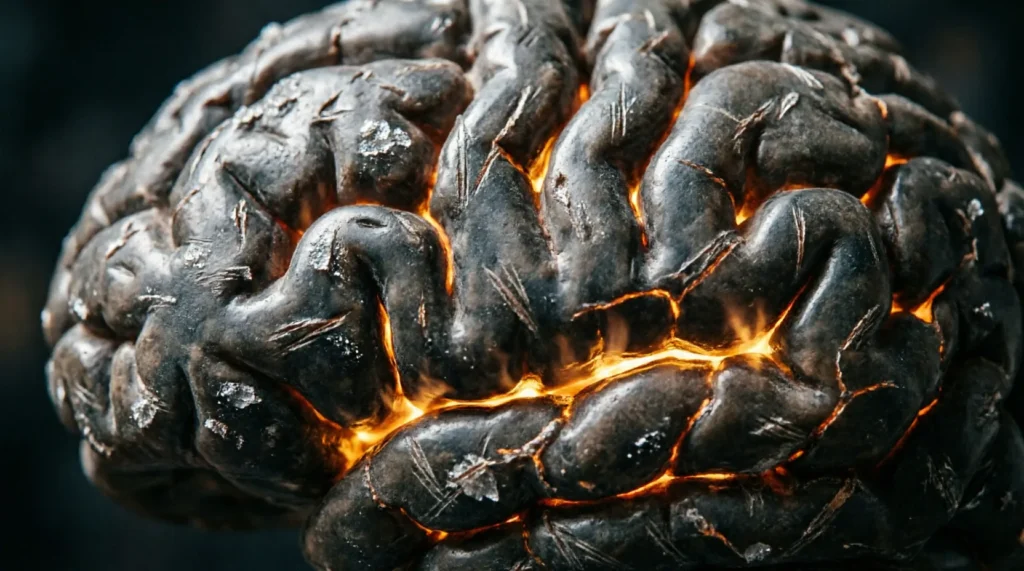
Quick answer: The correct phrase is “engraved in my brain” when referring to memories or information that are permanently fixed in your mind. “Ingrained” describes habits, attitudes, or beliefs that are deeply established over time, not specific memories or images.
These two words sound similar and both relate to something being deeply fixed, which causes constant confusion. Writers mix them up in emails, essays, and social media posts daily, but they have distinct meanings and proper uses that matter for clear communication.
| Term | Meaning / When to use | Example sentence |
|---|---|---|
| Engraved | Carved, etched, or impressed into a hard surface; used for memories, images, or specific information permanently fixed in your mind | “The traumatic scene was engraved in my brain for years.” |
| Ingrained | Deeply embedded or established over time, especially referring to habits, beliefs, attitudes, or dirt worked into fabric/fibers | “His ingrained fear of public speaking took therapy to overcome.” |
When to use “engraved”
Use “engraved” when you’re talking about something that has been cut, carved, or etched into a hard surface like metal, stone, or wood. The word comes from the Old French “engraver,” and according to Wikipedia’s entry on engraving, it specifically refers to the practice of incising a design onto a hard, usually flat surface by cutting grooves into it with a burin or other tool.
When used metaphorically for memories or mental images, “engraved” suggests that something is so vivid and permanent that it feels physically carved into your consciousness. This is the word you want for that “in my brain” phrase because it captures the idea of a specific moment, image, or piece of information being permanently etched in your memory.
Here are real examples I’ve corrected in my editing work:
- Email to a therapist: “The accident scene is engraved in my brain, and I replay it every night.” (Correct — a specific traumatic memory permanently fixed)
- Wedding toast: “The way she looked at him that day is engraved in my brain as one of life’s most beautiful moments.” (Correct — a vivid, permanent mental image)
- Student’s essay: “I’ve engraved these formulas in my brain before the exam.” (Correct — specific information memorized permanently)
I see this mistake constantly in cover letters where applicants write things like “Your company values are ingrained in my brain” when they actually mean those values are now part of their belief system (which would use “ingrained”), or they’re trying to say they’ve memorized something specific (which would use “engraved”). The distinction matters because one suggests deep habituation while the other suggests permanent marking.
When to use “ingrained”
Use “ingrained” when describing habits, attitudes, beliefs, or behaviors that have become deeply established over a long period. The word literally means worked into the fibers or substance of something — think of dirt that’s been ground into carpet so deeply that regular vacuuming won’t remove it. It can also refer to ideas or patterns of thinking that are so deeply rooted they’re difficult or impossible to change.
The term has interesting historical usage. According to Wikipedia’s discussion of ingrained clay, the concept of something being “ingrained” relates to materials or substances that are worked deeply into a surface or structure, becoming an integral part of it rather than just sitting on top.
You’ll use “ingrained” for things like:
- Prejudices or biases developed over years
- Work habits formed through repetition
- Cultural beliefs absorbed from childhood
- Personality traits that seem unchangeable
- Dirt or stains worked deep into fabric
Real-world examples from my editing desk:
- Resume bullet point: “I worked to overcome my ingrained hesitation to delegate tasks.” (Correct — a long-standing habit/behavior pattern)
- Text message to a friend: “His ingrained optimism helps him through tough times.” (Correct — a deep personality trait)
- LinkedIn bio: “My ingrained belief in lifelong learning drives my professional development.” (Correct — a fundamental belief system)
The key difference: “engraved” is about specific moments or information being permanently marked, while “ingrained” is about patterns, habits, or beliefs becoming deeply rooted over time. You wouldn’t say a childhood memory is “ingrained” in your brain — that’s what “engraved” is for. But you would say that your work ethic is “ingrained” because it’s a pattern developed over years.
How to remember the difference
Here’s the memory trick I teach every student and junior writer who comes to me with this confusion: Think about the first letter and what it represents.
Engraved starts with E — think Etched or Evidence. When something is engraved, it leaves visible evidence on a surface, like an etching. Specific memories and images are like etchings — they’re distinct, visible mental pictures carved into your consciousness.
Ingrained starts with I — think Inside or Inner nature. When something is ingrained, it’s worked into the inside fibers of something, becoming part of its inner nature. Habits and beliefs are like this — they’re woven into who you are, not just marked on the surface.
Another trick: Engraved = Event. Specific events get engraved in your memory. Ingrained = Inclination. Your inclinations, tendencies, and habitual ways of thinking are ingrained.
Here’s a practical test: Ask yourself, “Am I talking about a specific moment/image/information, or am I talking about a pattern/habit/belief?” If it’s the first, use engraved. If it’s the second, use ingrained.
I keep a sticky note on my monitor that says: “Did someone carve it? Use ENgraved. Did it grow there? Use INgrained.” It sounds silly, but after correcting this error in hundreds of manuscripts, I can tell you that simple visual reminders work.
Common mistakes and exceptions
The most common mistake I encounter is people using “ingrained in my brain” when they actually mean “engraved in my brain.” This happens because both words suggest permanence, but they create different mental images. Saying a memory is “ingrained” suggests it’s a habit of thinking, while “engraved” correctly suggests it’s a permanent mark or impression.
Regional variations: Both American and British English use these words the same way, so there’s no US/UK spelling distinction to worry about here (unlike “gray/grey” or “practice/practise”). The confusion is purely about meaning, not regional spelling preferences.
The overlap zone: Here’s where it gets tricky, and where even experienced writers stumble. Sometimes a belief can be both engraved AND ingrained, depending on what aspect you’re emphasizing. For example:
- “The image of that painting is engraved in my brain.” (You’re talking about the specific visual memory)
- “My appreciation for classical art is ingrained in my brain.” (You’re talking about a developed preference/habit of mind)
Both could be true for the same person about the same painting, but they’re describing different things — one is the memory itself, the other is the resulting attitude.
Exception for “ingrained habit”: You’ll sometimes hear people say “ingrained in my memory” when discussing long-standing mental patterns. This is acceptable when talking about habitual ways of thinking or remembering, but not for specific memories. For instance:
- Correct: “My ingrained habit of double-checking my work saves me from errors.”
- Incorrect: “The date of the battle is ingrained in my memory.” (Should be “engraved”)
Common error in academic writing: I constantly see students write things like “The theory became ingrained in my brain after studying it” when they mean they memorized it (engraved) or when they mean they internalized it as a way of thinking (ingrained). Be specific about what happened — did you memorize facts, or did you adopt a framework for thinking?
Frequently Asked Questions
Can I use “ingrained in my brain” instead of “engraved in my brain”?
No, not if you’re talking about specific memories or images. “Ingrained in my brain” suggests a habit or pattern of thinking, while “engraved in my brain” correctly describes a permanent mental image or memory. Using the wrong one changes your meaning.
Is “etched in my brain” the same as “engraved in my brain”?
Yes, these are essentially synonymous when used metaphorically for memories. Both “etched” and “engraved” refer to cutting or carving into a surface, and both work perfectly for describing permanent mental impressions. You can use them interchangeably.
What’s the difference between “ingrained” and “embedded” in my brain?
“Embedded” suggests something placed or inserted into your memory, while “ingrained” suggests something that developed over time and became deeply rooted. “Embedded” works for specific memories (like “engraved”), while “ingrained” works for habits and beliefs. Choose based on whether the thing was placed there or grew there.
Can something be both engraved and ingrained?
Yes, but they describe different aspects. A traumatic event might be engraved in your brain (the specific memory is permanent) and also create an ingrained fear response (a lasting pattern of behavior). The engraving is the snapshot; the ingraining is the lasting change to your mental habits.

Nathan Williams is a seasoned editor and writer with a passion for the subtleties of the English language. With a degree in English from NYU and more than 12 years of editorial experience, he has honed his expertise in spelling accuracy and the comparison of often-misused words. Nathan’s foray into language analysis was sparked by his desire to help others communicate more effectively and avoid common pitfalls in writing. At WordCompareHub, he crafts comprehensive guides and articles that discuss word usage distinctions and provide effective spelling strategies. Nathan is driven by the belief that clarity in language is key to effective communication. In his leisure time, he enjoys crosswords and participates in local word games, continually expanding his lexicon and sharpening his linguistic skills.